Bagalamukhi, the eighth Mahavidya, from a Dashamahavidya series (c. 1725): Art, History and Details
Bagalamukhi, the eighth Mahavidya, from a Dashamahavidya series at the Cleveland Museum of Art: c. 1725, gum tempera, gold, and silver on paper. Explore the work's context, creator attribution and collection history.
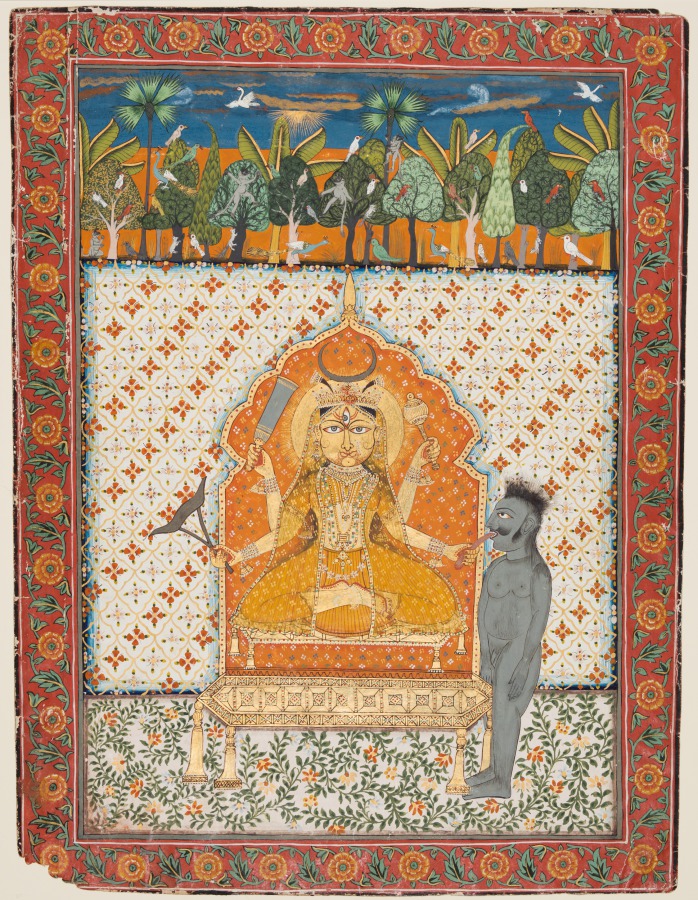
Bagalamukhi, the eighth Mahavidya, from a Dashamahavidya series (c. 1725) is in the Cleveland Museum of Art collection.
The work and its context
The museum's open-access catalogue describes the work:
This enigmatic painting remains unidentified. Set in a forest teeming with wildlife, a four-armed goddess with three eyes and a crescent moon in her crown shows her dominance over a naked, ashen male figure standing to her left by clutching his tongue. In her right hands, she appears to hold agricultural implements, while in her upper left hand she holds a mace.
Object facts
- Title: Bagalamukhi, the eighth Mahavidya, from a Dashamahavidya series
- Date: c. 1725
- Culture: Northwestern India, Rajasthan, Rajput Kingdom of Sirohi; or Northern Deccan, Aurangabad
- Type: Painting
- Technique: gum tempera, gold, and silver on paper
- Dimensions: Page: 35.6 x 26.7 cm (14 x 10 1/2 in.)
- Collection: Indian Art
- Department: Indian and Southeast Asian Art
- Accession number: 2018.200
A detail from the museum
His spiky hair standing on end suggests that the naked figure is a demon.
Collection credit
Purchase and partial gift from the Catherine and Ralph Benkaim Collection; Severance and Greta Millikin Purchase Fund
View the collection record
See the museum's photographs and full catalogue entry. Catalogue text is reproduced from the Cleveland Museum of Art's open-access data, with HTML formatting removed. This object and its supplied image are designated CC0.
Sources
More in Lifestyle
Keep reading
Related stories