Bahram Visits the White Domed Pavilion on Friday, illustrated with text in Khamsa of Nizami (verso), from a Haft Paykar (Seven Portraits) of Nizami (c. 1560–80): Art, History and Details
Bahram Visits the White Domed Pavilion on Friday, illustrated with text in Khamsa of Nizami (verso), from a Haft Paykar (Seven Portraits) of Nizami at the Cleveland Museum of Art: c. 1560–80, opaque watercolor, ink, and gold on paper. Explo
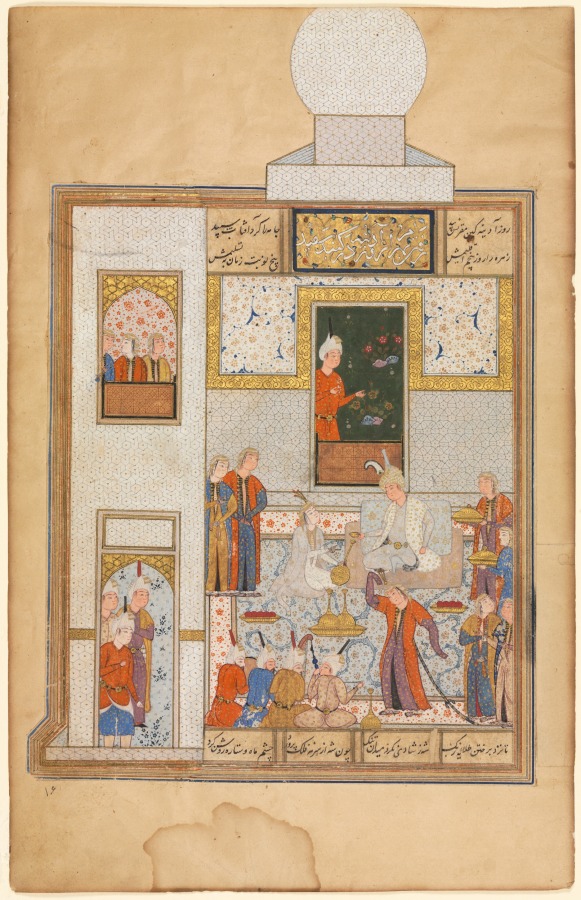
Bahram Visits the White Domed Pavilion on Friday, illustrated with text in Khamsa of Nizami (verso), from a Haft Paykar (Seven Portraits) of Nizami (c. 1560–80) is in the Cleveland Museum of Art collection.
The work and its context
The museum's open-access catalogue describes the work:
The Haft Paykar is an epic romantic poem that tells the story of the Sasanian king, Bahram Gur (ruled AD 420–38). The story relates how the king had an architect construct seven domed pavilions with different colors for each of his seven beautiful brides who came from different parts of the world. On each day of the week, the king visited one princess and enjoyed her company. In the center of this scene, sits Bahram and his bride from Iran dressed in resplendent white garments. Attendants bring them food and drink, while a dancer and an ensemble of musicians entertains them.
Object facts
- Title: Bahram Visits the White Domed Pavilion on Friday, illustrated with text in Khamsa of Nizami (verso), from a Haft Paykar (Seven Portraits) of Nizami
- Date: c. 1560–80
- Culture: Iran, Shiraz, Safavid period (1501-1722)
- Type: Manuscript
- Technique: opaque watercolor, ink, and gold on paper
- Collection: Islamic Art
- Department: Islamic Art
- Accession number: 2006.146
A detail from the museum
The wife recounts a tale with dancing fairies, suggested by the girl dancing to music in the foreground of the painting.
Collection credit
Gift of William Kelly Simpson in memory of his wife Marilyn M. Simpson and her grandparents Mr. and Mrs. John D. Rockefeller Jr.
View the collection record
See the museum's photographs and full catalogue entry. Catalogue text is reproduced from the Cleveland Museum of Art's open-access data, with HTML formatting removed. This object and its supplied image are designated CC0.
Sources
More in Lifestyle
Keep reading