Ballgame Thin Stone Head (Hacha) (600–900): Art, History and Details
Ballgame Thin Stone Head (Hacha) at the Cleveland Museum of Art: 600–900, stone, pigment traces. Explore the work's context, creator attribution and collection history.
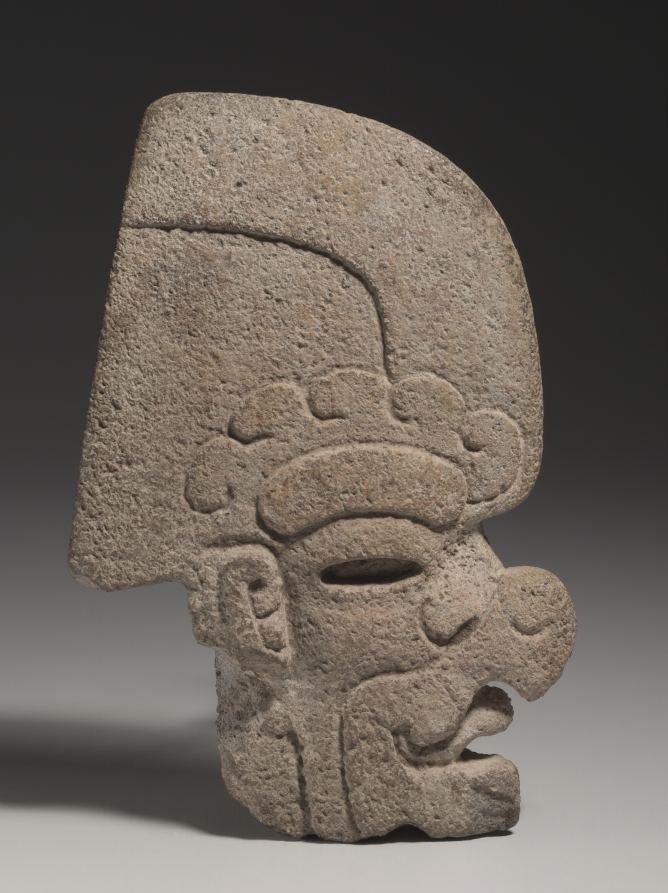
Ballgame Thin Stone Head (Hacha) (600–900) is in the Cleveland Museum of Art collection.
The work and its context
The museum's open-access catalogue describes the work:
In contrast to other ballgame sculptures on display, it seems unlikely that thin stone heads, known as hachas, are renditions of actual ballgame gear. Their use remains unclear, but the notch at the back of most examples suggests they might have served as architectural ornaments during play or game ceremonies. Also, in a few artistic depictions of game ceremonials, such heads rest upon U-shaped hip protectors, like one nearby.
Object facts
- Title: Ballgame Thin Stone Head (Hacha)
- Date: 600–900
- Culture: Mexico, Gulf Coast, Classic Veracruz style (600-1100)
- Type: Sculpture
- Technique: stone, pigment traces
- Dimensions: Overall: 23.7 x 6.9 x 15.8 cm (9 5/16 x 2 11/16 x 6 1/4 in.)
- Collection: AA - Mesoamerica
- Department: Art of the Americas
- Accession number: 1990.248
Collection credit
Gift of Mr. and Mrs. James C. Gruener
Further reading listed by the museum
- Young-Sánchez, Margaret. “The Gruener Collection of Pre-Columbian Art.” The Bulletin of the Cleveland Museum of Art 79, no. 7 (September 1992): 234–275.
View the collection record
See the museum's photographs and full catalogue entry. Catalogue text is reproduced from the Cleveland Museum of Art's open-access data, with HTML formatting removed. This object and its supplied image are designated CC0.
Sources
More in Lifestyle
Keep reading