Beaker with Shells (900–1100): Art, History and Details
Beaker with Shells at the Cleveland Museum of Art: 900–1100, gold, hammered. Explore the work's context, creator attribution and collection history.
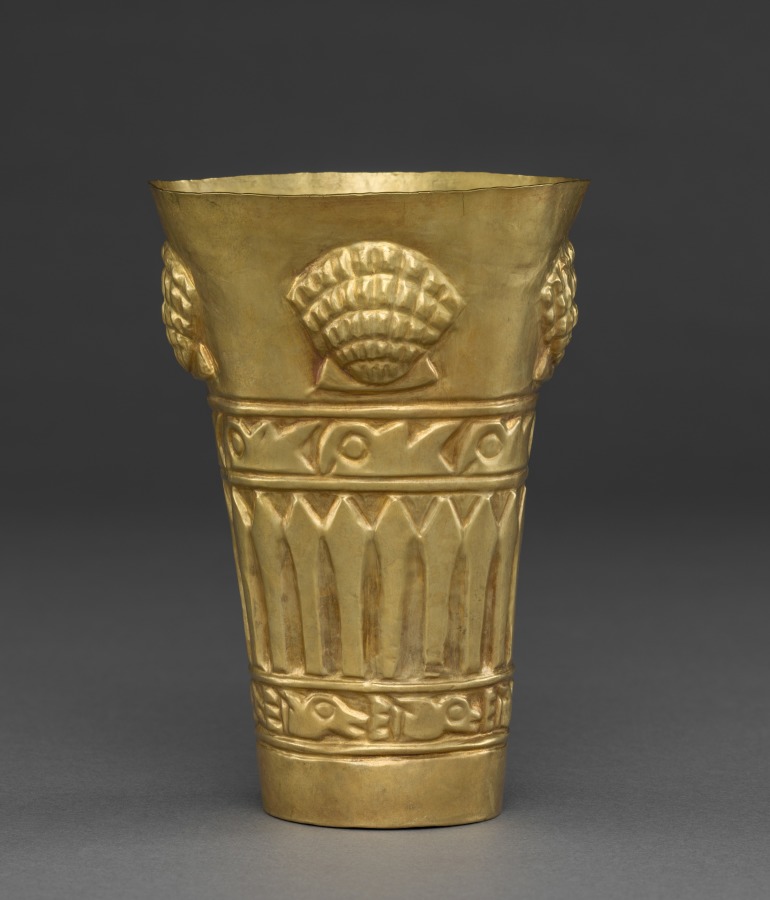
Beaker with Shells (900–1100) is in the Cleveland Museum of Art collection.
The work and its context
The museum's open-access catalogue describes the work:
This beaker was created by an artist of the Lambayeque culture of Peru's north coast. Shells appear in the upper register representing spondylus, the red-orange thorny oyster greatly valued by pre-Hispanic Andean societies. If such beakers were used in life—that is, not created exclusively for the lavish tombs in which they have been found in quantities—they may have figured in feasting events that were central to late pre-Hispanic political, social, and religious life.
Object facts
- Title: Beaker with Shells
- Date: 900–1100
- Culture: Central Andes (Peru), Lambayeque (Sicán) people, 10th century-12th century
- Type: Metalwork
- Technique: gold, hammered
- Dimensions: Overall: 14.6 x 10.2 cm (5 3/4 x 4 in.)
- Collection: AA - Andes
- Department: Art of the Americas
- Accession number: 2015.8
A detail from the museum
Highly valued as a luxury material, spondylus shells served as symbols of power and prestige.
Collection credit
Severance and Greta Millikin Purchase Fund
Further reading listed by the museum
- Cleveland Museum of Art. Museum Masters: 2016-17 Companion Guide. [Cleveland, Ohio]: Cleveland Museum of Art, 2016.
- Bergh, Susan E. “Acquisitions 2015: Pre-Columbian and Native North American Art.” Cleveland Art: Cleveland Museum of Art Members Magazine 56, no. 2 (March/April 2016): 32-33.
View the collection record
See the museum's photographs and full catalogue entry. Catalogue text is reproduced from the Cleveland Museum of Art's open-access data, with HTML formatting removed. This object and its supplied image are designated CC0.
Sources
More in Lifestyle
Keep reading