Beggar (Kojiki) (1871): Art, History and Details
Beggar (Kojiki) at the Cleveland Museum of Art: 1871, hanging scroll; ink on paper. Explore the work's context, creator attribution and collection history.
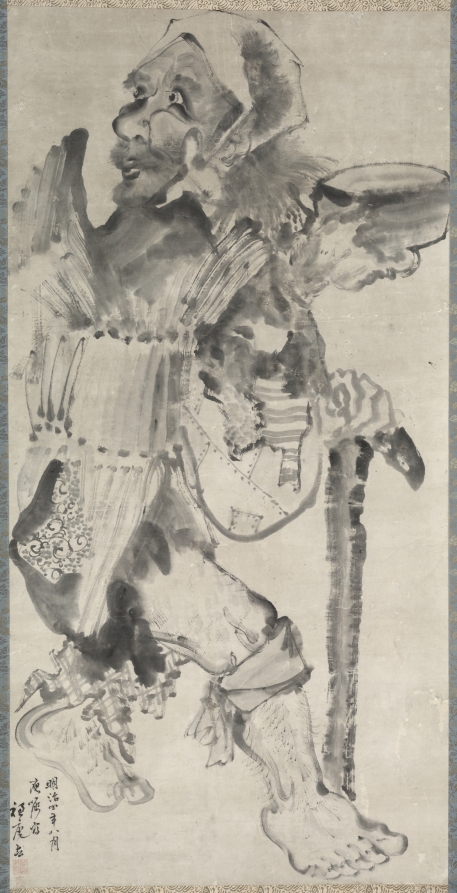
Beggar (Kojiki) (1871) is in the Cleveland Museum of Art collection. The museum's creator attribution is Hirafuku Suian (Japanese, 1844–1890).
The work and its context
The museum's open-access catalogue describes the work:
The Japanese term for beggar, kojiki, derives from the word kotsujiki, which refers to Buddhist monks taking bowls from door to door to request sustenance. The son of the artist Suian Bunrō, Suian Hirafuku was born in Kakunodate in Japan’s northern Akita prefecture. When he was 16, he went to study in Kyoto. In 1880 he took first place with another painting titled Beggar at the third Akita Prefectural Industrial Exposition, and in 1890, he took second prize for technical achievement with Nursing Tigress at the third National Industrial Exposition.
Object facts
- Title: Beggar (Kojiki)
- Date: 1871
- Creator attribution: Hirafuku Suian (Japanese, 1844–1890)
- Culture: Japan, Meiji period (1868–1912)
- Type: Painting
- Technique: hanging scroll; ink on paper
- Dimensions: Overall: 215.3 x 93 cm (84 3/4 x 36 5/8 in.); Painting only: 141 x 70.8 cm (55 1/2 x 27 7/8 in.)
- Collection: ASIAN - Hanging scroll
- Department: Japanese Art
- Accession number: 1988.73
Collection credit
John L. Severance Fund
Further reading listed by the museum
- “The Year in Review for 1988.” The Bulletin of the Cleveland Museum of Art 76, no. 2 (February 1989): 30–75.
View the collection record
See the museum's photographs and full catalogue entry. Catalogue text is reproduced from the Cleveland Museum of Art's open-access data, with HTML formatting removed. This object and its supplied image are designated CC0.
Sources
More in Lifestyle
Keep reading