Betel nut container (1800s): Art, History and Details
Betel nut container at the Cleveland Museum of Art: 1800s, Cast brass with silver inlays, weave fabric (handle), glass beads. Explore the work's context, creator attribution and collection history.
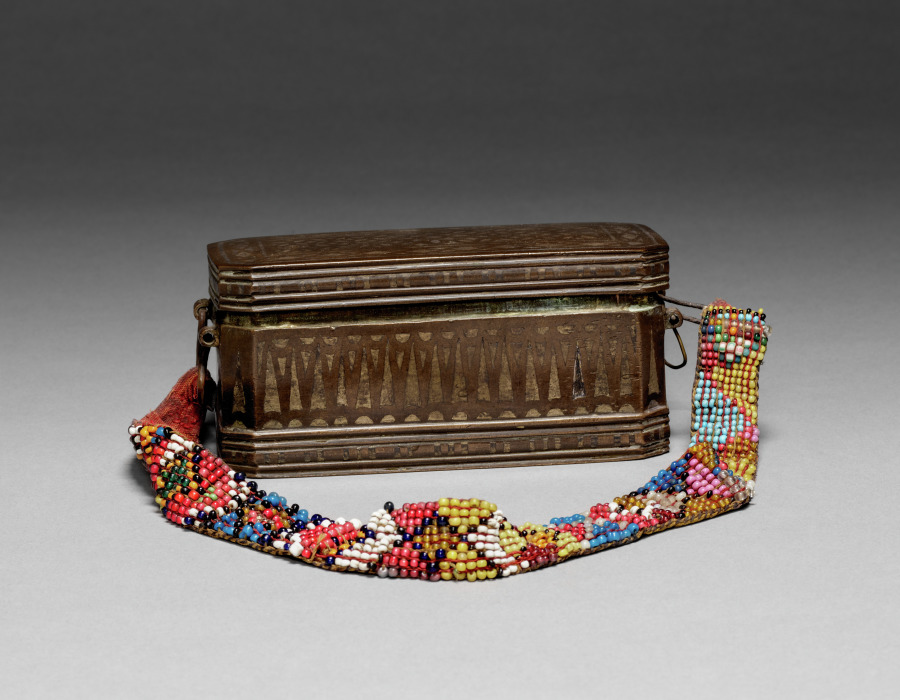
Betel nut container (1800s) is in the Cleveland Museum of Art collection.
The work and its context
The museum's open-access catalogue describes the work:
Chewing betel has been a social ritual common throughout Southeast Asia and Oceania for centuries. This betel nut container held the ingredients (areca nut, slaked lime, and betel leaves) used for this practice. The rectangular box, made of cast brass, is richly decorated with inlaid silver geometric motifs. It features a multicolored beaded strap with a pattern typical of the Bagobo people.
Object facts
- Title: Betel nut container
- Date: 1800s
- Culture: Philippines, Mindanao, most likely Maranao
- Type: Arms and Armor
- Technique: Cast brass with silver inlays, weave fabric (handle), glass beads
- Dimensions: Average: 7.4 cm (2 15/16 in.)
- Collection: Oceanic Art
- Department: Oceania
- Accession number: 1916.1023
A detail from the museum
The beaded strap suggests portability; it may have been worn or suspended during social gatherings.
Collection credit
Gift of J. H. Wade
View the collection record
See the museum's photographs and full catalogue entry. Catalogue text is reproduced from the Cleveland Museum of Art's open-access data, with HTML formatting removed. This object and its supplied image are designated CC0.
Sources
More in Lifestyle
Keep reading