Blouse in four pieces (1800s): Art, History and Details
Blouse in four pieces at the Cleveland Museum of Art: 1800s, Plain weave piña; needle lace (drawnwork) and white cotton embroidery. Explore the work's context, creator attribution and collection history.
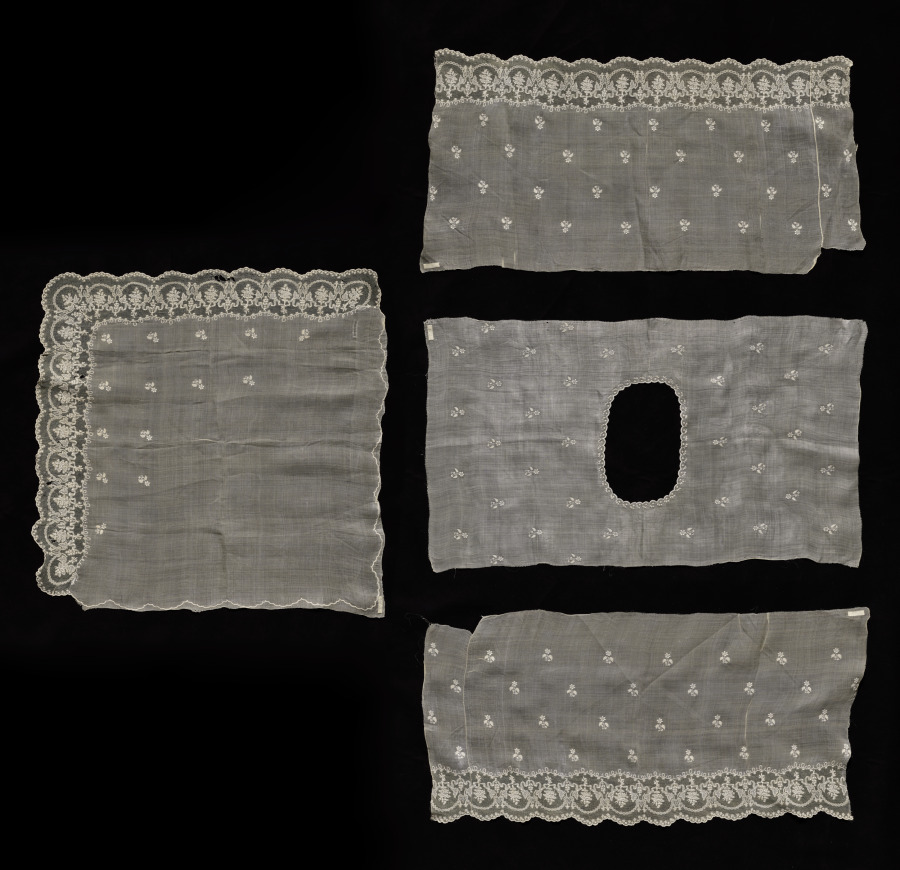
Blouse in four pieces (1800s) is in the Cleveland Museum of Art collection.
The work and its context
The museum's open-access catalogue describes the work:
This group consists of coordinated clothing components made of fine piña cloth in plain weave, all worked in matching hand-embroidered cotton motifs. The set includes a fichu, an unsewn blouse front (pechera), and two unsewn sleeve panels. All four pieces share the same ground material, embroidery thread, and design vocabulary, indicating that they were intended as elements of a single baro-camisa ensemble.
Object facts
- Title: Blouse in four pieces
- Date: 1800s
- Culture: Philippines
- Type: Embroidery
- Technique: Plain weave piña; needle lace (drawnwork) and white cotton embroidery
- Dimensions: Overall: 93 x 52.1 cm (36 5/8 x 20 1/2 in.)
- Collection: T - Lace
- Department: Textiles
- Accession number: 1943.380
A detail from the museum
Because piña is more translucent than abacá, it has historically been considered more prestigious.
Collection credit
Gift of Mrs. O. E. Kelsey
View the collection record
See the museum's photographs and full catalogue entry. Catalogue text is reproduced from the Cleveland Museum of Art's open-access data, with HTML formatting removed. This object and its supplied image are designated CC0.
Sources
More in Lifestyle
Keep reading