Bodhisattva (mid-1200s): Art, History and Details
Bodhisattva at the Cleveland Museum of Art: mid-1200s, wood with traces of lacquer, polychromy, and cut gold lear (kirikane). Explore the work's context, creator attribution and collection history.
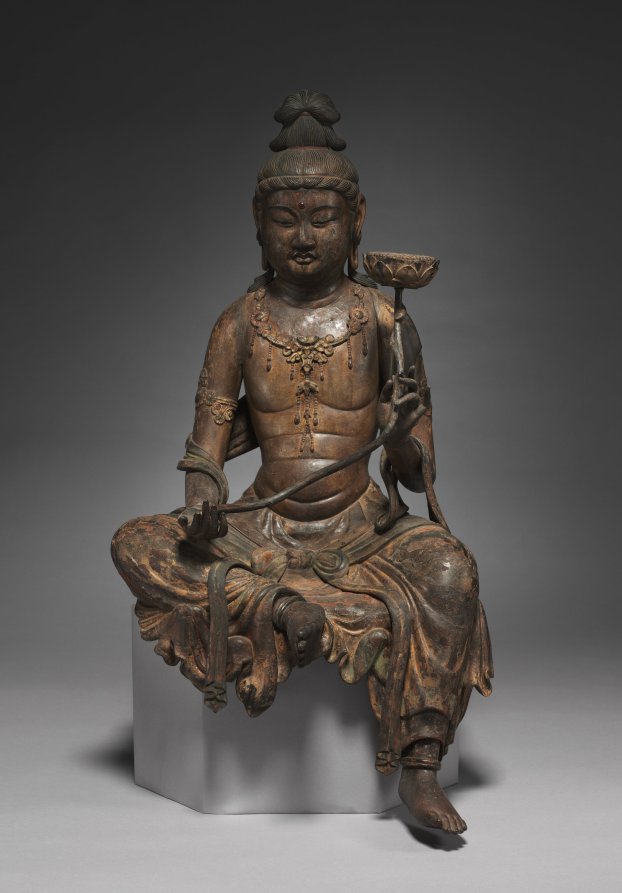
Bodhisattva (mid-1200s) is in the Cleveland Museum of Art collection.
The work and its context
The museum's open-access catalogue describes the work:
A Bosatsu (Bodhisattva in Sanskrit) is a being that has attained enlightenment but has compassionately refrained from entering nirvana in order to save others. As an attendant of Buddha, Bosatsu assumes many forms, all of which are worshipped as deities in Japanese Buddhism.
Object facts
- Title: Bodhisattva
- Date: mid-1200s
- Culture: Japan, Kamakura period (1185–1333)
- Type: Sculpture
- Technique: wood with traces of lacquer, polychromy, and cut gold lear (kirikane)
- Dimensions: Overall: 64.8 cm (25 1/2 in.)
- Collection: Japanese Art
- Department: Japanese Art
- Accession number: 1983.18
Collection credit
Leonard C. Hanna Jr. Fund
Further reading listed by the museum
- Turner, Evan H. “Year in Review for 1983.” The Bulletin of the Cleveland Museum of Art 71, no. 2 (February 1984): 38–79.
- Inseiki no butsuzō: Jōchō kara Unkei e: tokubetsu tenrankai [院政期の仏像 : 定朝から運慶へ: 特別展覧会 = Buddhist sculptures: from mid-11th to the end of 12th centuries: special exhibition]. Kyoto: Kyoto National Museum 京都国立博物館, 1991.
- Inseiki no butsuzō: Teichō kara Unkei e [Buddhist Sculptures in the Insei Political Period = 院政期の仏像 : 定朝から運慶へ]. Tōkyō: 岩波書店, 1992.
View the collection record
See the museum's photographs and full catalogue entry. Catalogue text is reproduced from the Cleveland Museum of Art's open-access data, with HTML formatting removed. This object and its supplied image are designated CC0.
Sources
More in Lifestyle
Keep reading