Bottle-Shaped Vase (1796–1820): Art, History and Details
Bottle-Shaped Vase at the Cleveland Museum of Art: 1796–1820, Porcelain, overglaze colors and gold. Explore the work's context, creator attribution and collection history.
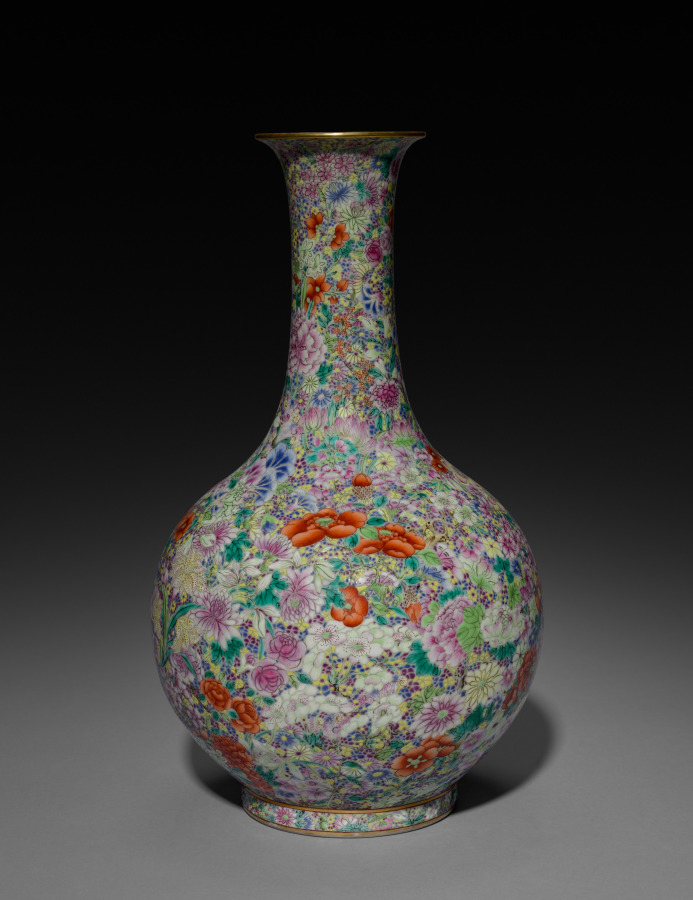
Bottle-Shaped Vase (1796–1820) is in the Cleveland Museum of Art collection.
The work and its context
The museum's open-access catalogue describes the work:
This vase is densely decorated with peonies, morning glories, lilies, and lotuses. Purple, yellow, and blue petals fill the surface, forming a continuous millefleur (thousand-flower) pattern. Each petal is delicately shaded to suggest volume and depth, creating a vivid yet orderly composition. The mouth is painted with gold pigment to imitate metal, evoking the appearance of copper-body-painted enamel as seen in Qing dynasty court art. Qing palace records indicate that vases with such patterns were used in everyday flower-viewing displays. In late Qing inventories, comparable examples were listed as furnishings for the emperor and his consorts.
Object facts
- Title: Bottle-Shaped Vase
- Date: 1796–1820
- Culture: China, Qing dynasty (1644–1911), Jiaqing reign (1796–1820)
- Type: Ceramic
- Technique: Porcelain, overglaze colors and gold
- Dimensions: Overall: 30.8 cm (12 1/8 in.)
- Collection: China - Qing Dynasty
- Department: Chinese Art
- Accession number: 1944.151
A detail from the museum
Porcelain with this dense floral millefleurs decoration and a multitude of overglaze enamel colors was first made in the Qing dynasty and remained popular into the late 1800s.
Collection credit
The Elisabeth Severance Prentiss Collection
Further reading listed by the museum
- Catalogue of the Elisabeth Severance Prentiss collection: bequest of Elisabeth Severance Prentiss, 1944. Cleveland, OH: The Cleveland Museum of Art, 1944.
- Lin, Yi-Hsin 林逸欣. "Cleveland Museum of Art Presents 'A Myriad of Flowers and Bird in Chinese Art'" 克里夫蘭藝術博物館「中國藝術中的花鳥集錦」展覽. Art & Collection 典藏.古美術 402 (March 2026).
View the collection record
See the museum's photographs and full catalogue entry. Catalogue text is reproduced from the Cleveland Museum of Art's open-access data, with HTML formatting removed. This object and its supplied image are designated CC0.
Sources
More in Lifestyle
Keep reading