Bottle Vase (1662–1722): Art, History and Details
Bottle Vase at the Cleveland Museum of Art: 1662–1722, porcelain, Lang ware. Explore the work's context, creator attribution and collection history.
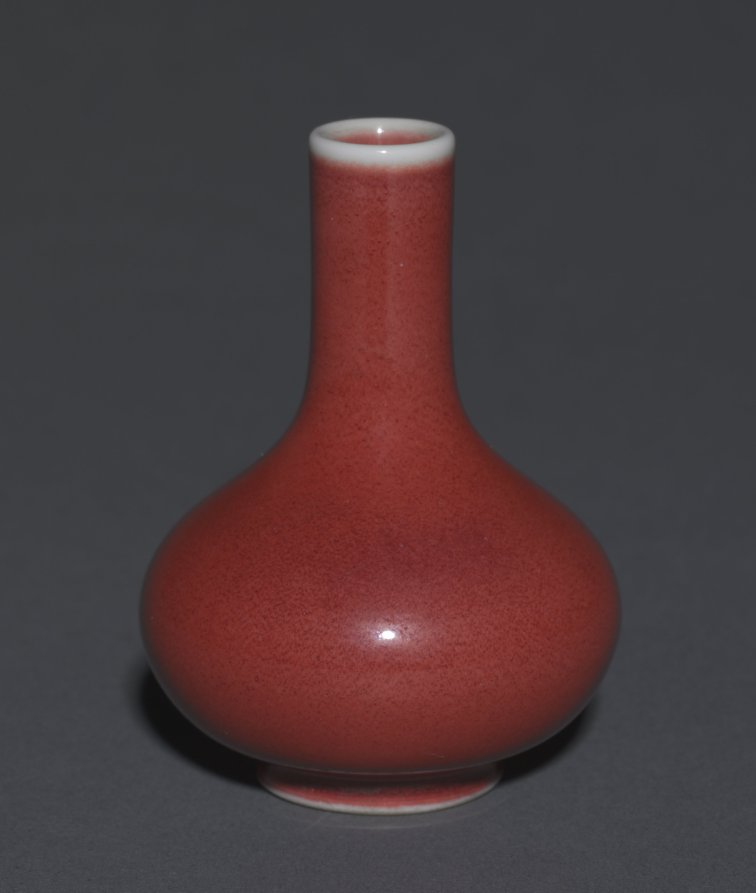
Bottle Vase (1662–1722) is in the Cleveland Museum of Art collection.
The work and its context
The museum's open-access catalogue describes the work:
In the Qing dynasty (1644–1911), luxury items became more affordable to larger parts of the society, including women, merchants, and literati in non-official positions. Imperial patronage and a growing urban population encouraged consumption of luxury goods and local craftmanship. This petite, red-glazed bottle vase is an example of Lang ware, or Lang yao in Chinese, developed at the imperial kilns at Jingdezhen. “Ox blood” glaze is one of the Qing dynasty's accomplishments in porcelain production.
Object facts
- Title: Bottle Vase
- Date: 1662–1722
- Culture: China, Qing dynasty (1644-1911), Kangxi reign (1662-1722)
- Type: Ceramic
- Technique: porcelain, Lang ware
- Dimensions: Overall: 8.4 cm (3 5/16 in.)
- Collection: China - Qing Dynasty
- Department: Chinese Art
- Accession number: 1940.942
Collection credit
Bequest of James Parmelee
Further reading listed by the museum
- Milliken, William M., Henry S. Francis, Howard Hollis, Gertrude Underhill, Silvia A. Wunderlich, and Nell G. Sill. “The Bequest of James Parmelee.” The Bulletin of the Cleveland Museum of Art 28, no. 2 (1941): 15–31.
View the collection record
See the museum's photographs and full catalogue entry. Catalogue text is reproduced from the Cleveland Museum of Art's open-access data, with HTML formatting removed. This object and its supplied image are designated CC0.
Sources
More in Lifestyle
Keep reading