Bound Deer Effigy Vessel (1000–1460s): Art, History and Details
Bound Deer Effigy Vessel at the Cleveland Museum of Art: 1000–1460s, Ceramic. Explore the work's context, creator attribution and collection history.
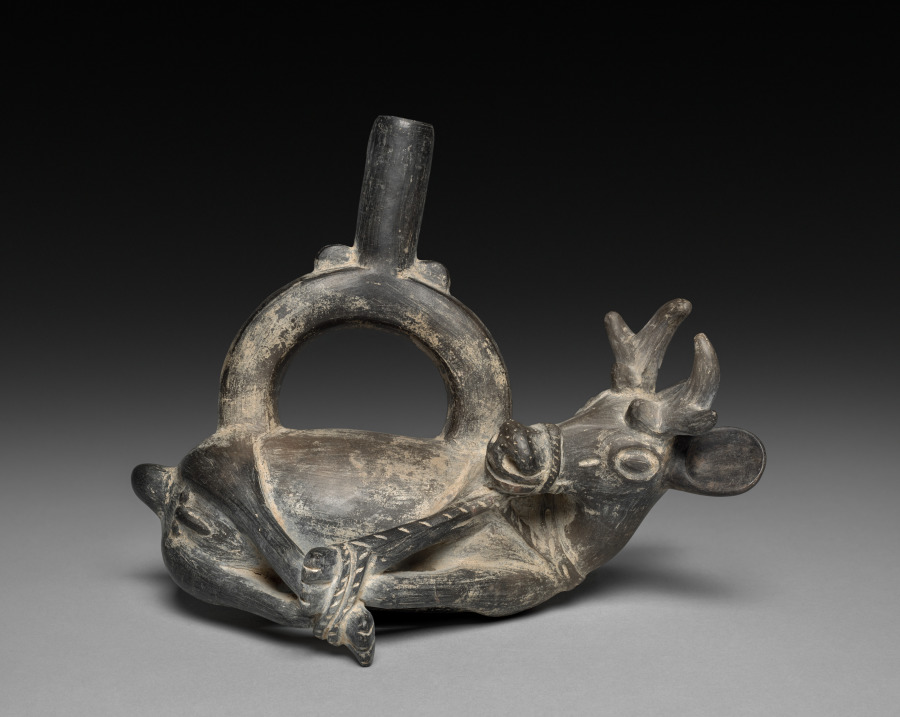
Bound Deer Effigy Vessel (1000–1460s) is in the Cleveland Museum of Art collection.
The work and its context
The museum's open-access catalogue describes the work:
This vessel was made by an artist of the Chimú Empire of Peru’s north coast. In the art of the Moche, an earlier culture in the region, the deer had complex symbolism related to ritual combat and the capture of prisoners. A memory of that symbolism may survive here in the binding of the deer’s feet.
Object facts
- Title: Bound Deer Effigy Vessel
- Date: 1000–1460s
- Culture: Andes, North Coast, Chimú people
- Type: Ceramic
- Technique: Ceramic
- Dimensions: Overall: 18.7 x 24 x 13 cm (7 3/8 x 9 7/16 x 5 1/8 in.)
- Collection: AA - Andes
- Department: Art of the Americas
- Accession number: 2017.59
A detail from the museum
Chimú potters fired their vessels in an atmosphere of reduced oxygen to achieve a uniform black surface.
Collection credit
Severance and Greta Millikin Purchase Fund
Further reading listed by the museum
- Lapiner, Alan C. Pre-Columbian Art of South America. New York: H.N. Abrams, 1976.
- Princeton University, and Jay I. Kislak Reference Collection (Library of Congress). In Celebration: Works of Art from the Collections of Princeton Alumni and Friends of the Art Museum, Princeton University. [Princeton, N.J.]: The Museum, 1997.
View the collection record
See the museum's photographs and full catalogue entry. Catalogue text is reproduced from the Cleveland Museum of Art's open-access data, with HTML formatting removed. This object and its supplied image are designated CC0.
Sources
More in Lifestyle
Keep reading