Bowl (1100s): Art, History and Details
Bowl at the Cleveland Museum of Art: 1100s, celadon. Explore the work's context, creator attribution and collection history.
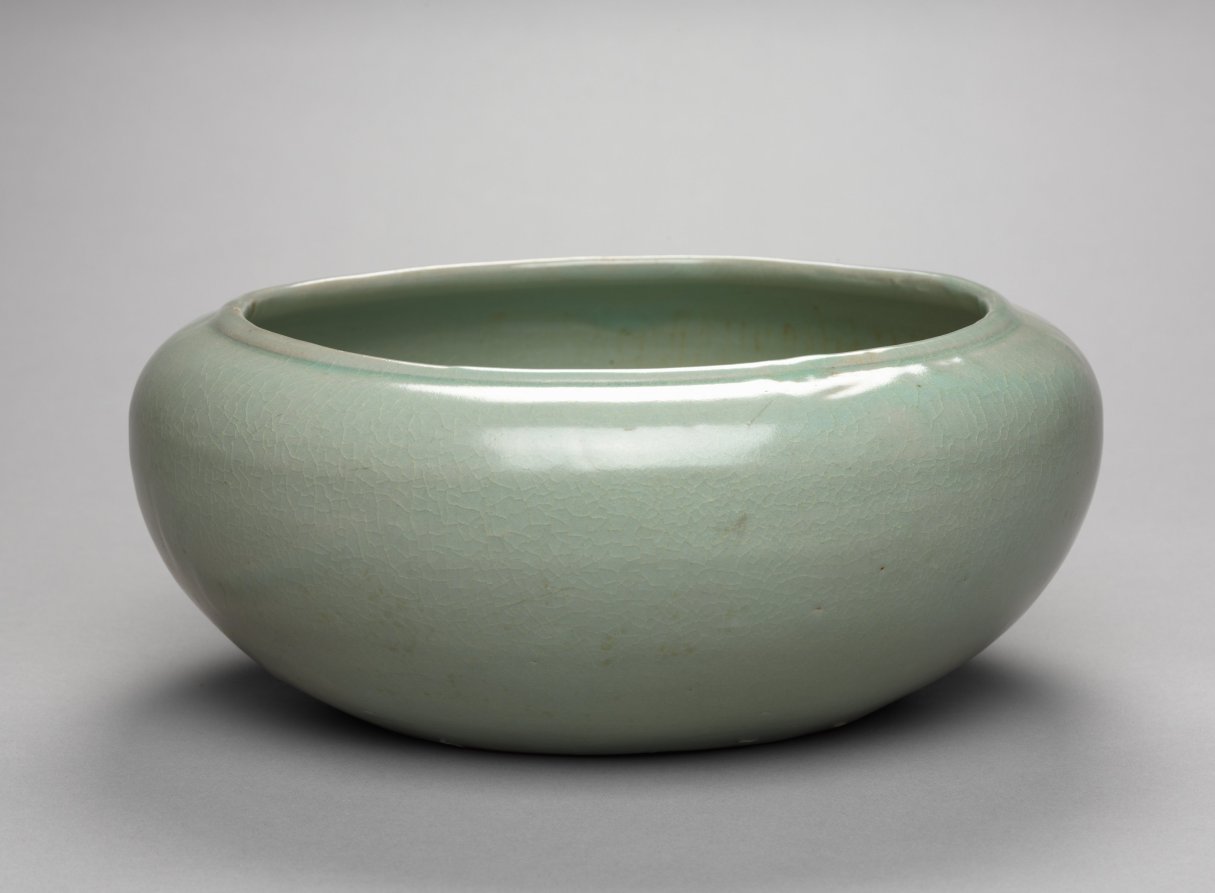
Bowl (1100s) is in the Cleveland Museum of Art collection.
The work and its context
The museum's open-access catalogue describes the work:
As early as the seventh century, the practice of drinking tea became an important part of elite culture in Korea. In enjoying teas, elites commissioned a variety of types of utensils and vessels including this large bowl, not only to make their tea-drinking experience more exciting, but also to show their refined taste.
Object facts
- Title: Bowl
- Date: 1100s
- Culture: Korea, Goryeo dynasty (918–1392)
- Type: Ceramic
- Technique: celadon
- Dimensions: Outer diameter: 25.1 cm (9 7/8 in.); Overall: 10.5 cm (4 1/8 in.)
- Collection: Korean Art
- Department: Korean Art
- Accession number: 1918.442
A detail from the museum
The distinctive bluish and greenish glaze of Goryeo celadons, shown in this bowl, is the result of distinctive small and long Korean kilns, which maintained a low oxygen saturation with a high level of carbon dioxide.
Collection credit
Director's Contingent Fund
Further reading listed by the museum
- Jang, Nam-won.The Tea and Celadons during the Goryeo Dynasty : Considering the Celadon Tea Utensils [고려시대 茶文化와 靑瓷]." Misulsa nondan, 129-162.
- Sparkles of Jade: Goryeo Celadon [高麗青磁 : ヒスイのきらめき]. Ōsaka: Ōsaka: Shiritsu Tōyō Tōji Bijutsukan, 2018.
- Goryeo Dynasty: Korea's Age of Enlightenment, 918-1392. San Francisco: Asian Art Museum, 2003.
View the collection record
See the museum's photographs and full catalogue entry. Catalogue text is reproduced from the Cleveland Museum of Art's open-access data, with HTML formatting removed. This object and its supplied image are designated CC0.
Sources
More in Lifestyle
Keep reading