Bowl (1700s): Art, History and Details
Bowl at the Cleveland Museum of Art: 1700s, bronze. Explore the work's context, creator attribution and collection history.
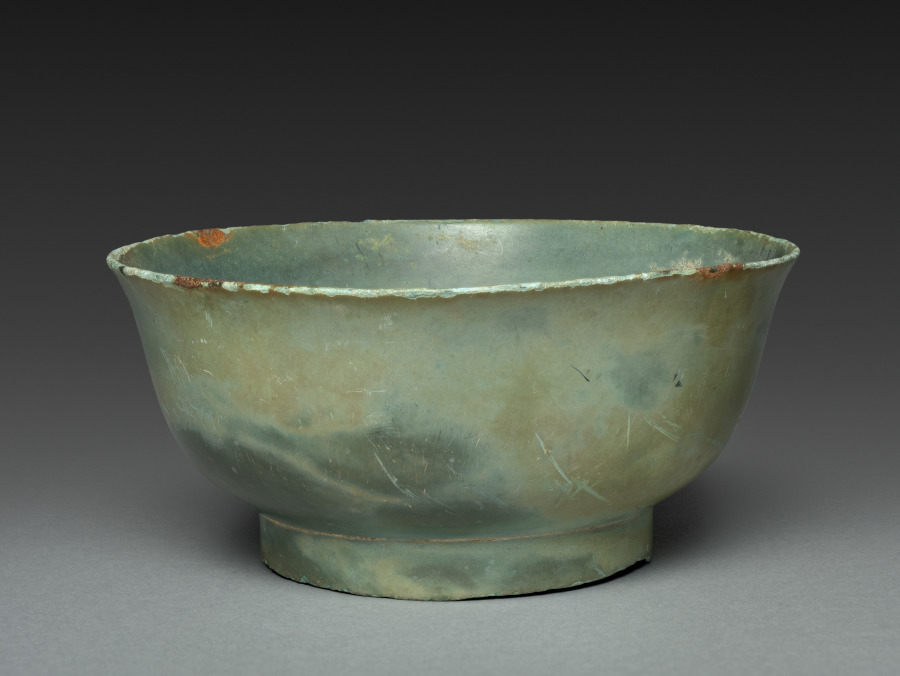
Bowl (1700s) is in the Cleveland Museum of Art collection.
The work and its context
The museum's open-access catalogue describes the work:
In ancestor veneration rituals, deceased parents or ancestors are sanctified as spirits who are believed to oversee their descendants. Three times a year, once at the lunar new year, once at the person’s death date, and once at the time of the mid-autumn festival, food would be placed on the table for the ancestors, including fruits, rice, meat, and rice wine. During these ceremonies the worshippers’ attitude was as reverential toward the objects meant to embody the ancestors’ spirits as that toward a living parent. This cup may have been used for ancestral rituals to contain rice wine.
Object facts
- Title: Bowl
- Date: 1700s
- Culture: Korea, Joseon dynasty (1392–1910)
- Type: Metalwork
- Technique: bronze
- Dimensions: Overall: 7.3 cm (2 7/8 in.)
- Collection: Korean Art
- Department: Korean Art
- Accession number: 1983.1036
A detail from the museum
This bronze bowl may have been used in family rituals such as ancestral worship ceremonies in the Joseon period.
Collection credit
Gift of Helen L. Marshall
Further reading listed by the museum
- An, Gui-sook, Korean Bronze Artisans [유기장]. Seoul: Hwasan munhwa, 2002.
- Treasures from Korea: Arts and Culture of the Joseon Dynasty, 1392-1910. Philadelphia: Philadelphia Museum of Art, 2014.
View the collection record
See the museum's photographs and full catalogue entry. Catalogue text is reproduced from the Cleveland Museum of Art's open-access data, with HTML formatting removed. This object and its supplied image are designated CC0.
Sources
More in Lifestyle
Keep reading