Bowl (1800s): Art, History and Details
Bowl at the Cleveland Museum of Art: 1800s, painted wood. Explore the work's context, creator attribution and collection history.
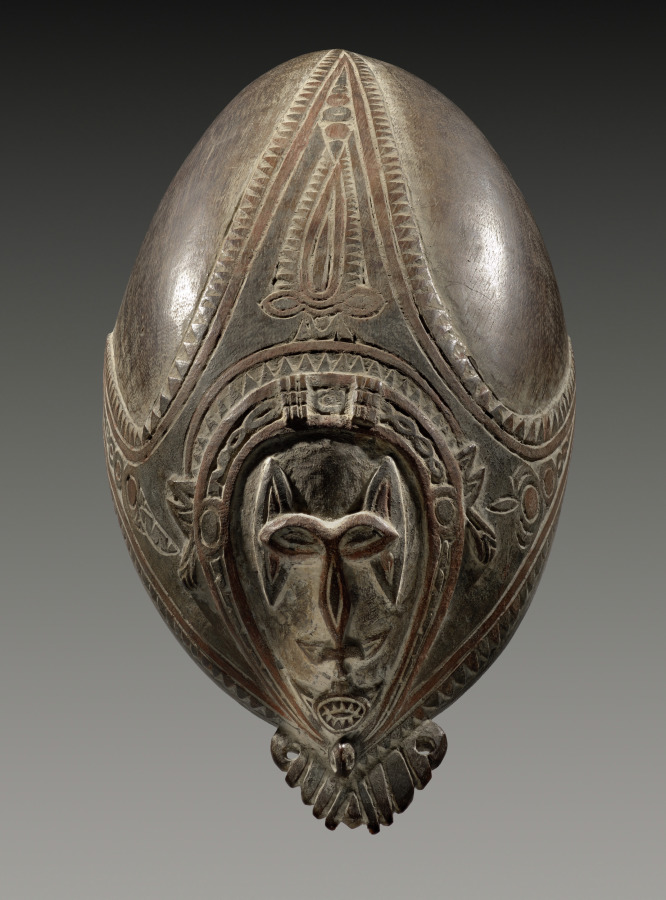
Bowl (1800s) is in the Cleveland Museum of Art collection.
The work and its context
The museum's open-access catalogue describes the work:
The people of the Tami Islands manufactured canoes, house beams, drums, bowls, lime spatulas, and neckrests using tools such as stone axes, bamboo knives, tree-bear teeth, and pig, cassowary, and dog bones. Tami bowls were carved from the hard wood of the azalea and decorated with patterns that vary from deep etching to high relief. Many bowls were blackened with a graphite compound and highly polished. Decorative patterns were owned by specific families, and could not be used by other carvers.
Object facts
- Title: Bowl
- Date: 1800s
- Culture: Melanesia, Papua New Guinea, Huon Gulf, Tami Islands, 19th century
- Type: Sculpture
- Technique: painted wood
- Dimensions: Overall: 9.9 x 40.3 x 17.4 cm (3 7/8 x 15 7/8 x 6 7/8 in.)
- Collection: Oceanic Art
- Department: Oceania
- Accession number: 1965.322
Collection credit
The Mary Spedding Milliken Memorial Collection, Gift of William Mathewson Milliken
View the collection record
See the museum's photographs and full catalogue entry. Catalogue text is reproduced from the Cleveland Museum of Art's open-access data, with HTML formatting removed. This object and its supplied image are designated CC0.
Sources
More in Lifestyle
Keep reading