Bowl (200–1 BCE): Art, History and Details
Bowl at the Cleveland Museum of Art: 200–1 BCE, silver gilt. Explore the work's context, creator attribution and collection history.
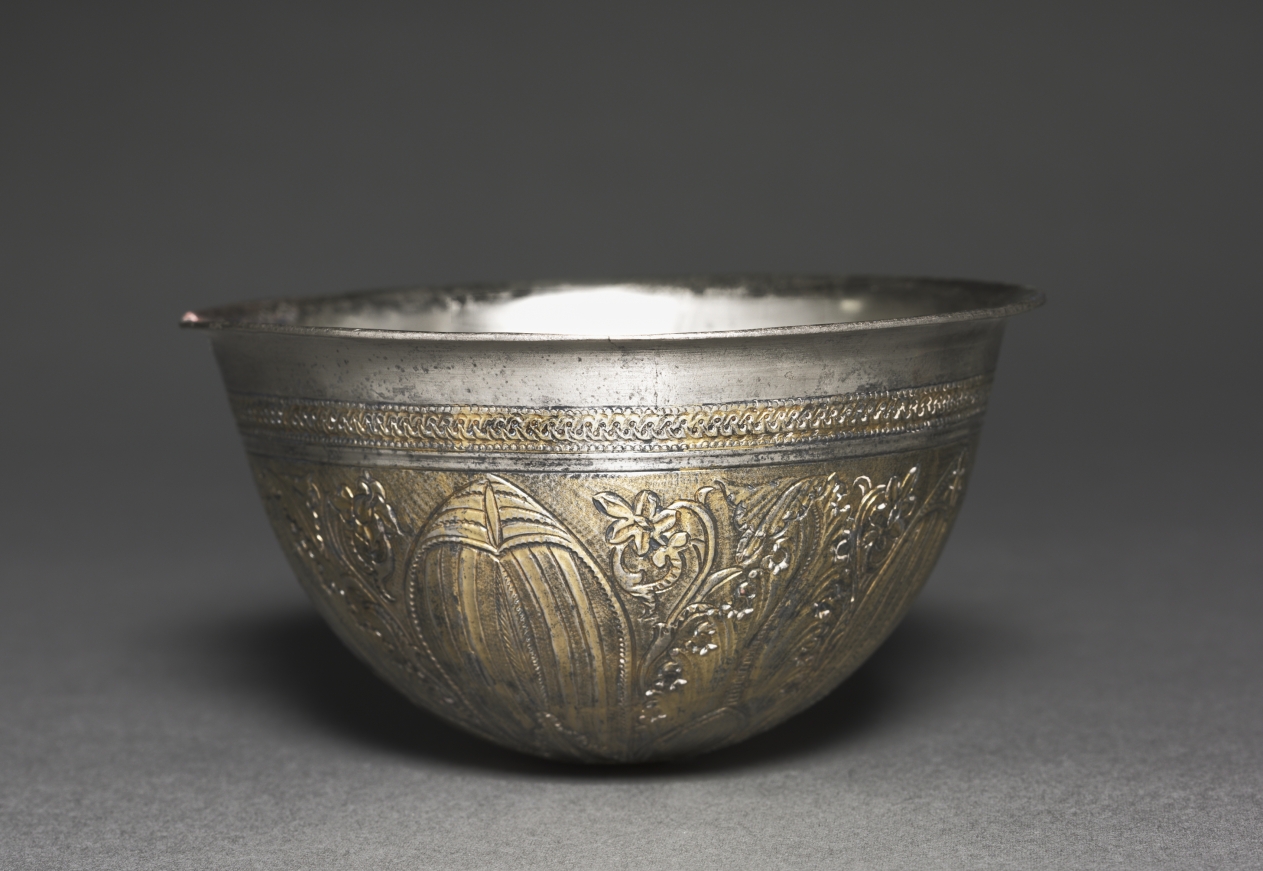
Bowl (200–1 BCE) is in the Cleveland Museum of Art collection.
The work and its context
The museum's open-access catalogue describes the work:
The exterior surface of this silver bowl is lavishly decorated with floral motifs. The bottom of the bowl is decorated with a floral design based on the lotus blossom, a popular motif in ancient Greece and Egypt. More petals and leaves radiate outward, alternating between water lily petals and acanthus leaves. Tendrils and blossoms fill the open spaces between the floral designs.
Object facts
- Title: Bowl
- Date: 200–1 BCE
- Culture: Greece, late Hellenistic period
- Type: Metalwork
- Technique: silver gilt
- Dimensions: Diameter: 13.7 cm (5 3/8 in.); Overall: 7.5 cm (2 15/16 in.)
- Collection: GR - Greek
- Department: Greek and Roman Art
- Accession number: 1986.24
A detail from the museum
Silver-gilt, a technique of layering a thin layer of gold over silver, was used to decorate this bowl.
Collection credit
John L. Severance Fund
Further reading listed by the museum
- Turner, Evan H. “The Year in Review for 1986.” The Bulletin of the Cleveland Museum of Art 74, no. 2 (February 1987): 38–79.
View the collection record
See the museum's photographs and full catalogue entry. Catalogue text is reproduced from the Cleveland Museum of Art's open-access data, with HTML formatting removed. This object and its supplied image are designated CC0.
Sources
More in Lifestyle
Keep reading
Related stories