Bowl (300–500 CE): Art, History and Details
Bowl at the Cleveland Museum of Art: 300–500 CE, silver. Explore the work's context, creator attribution and collection history.
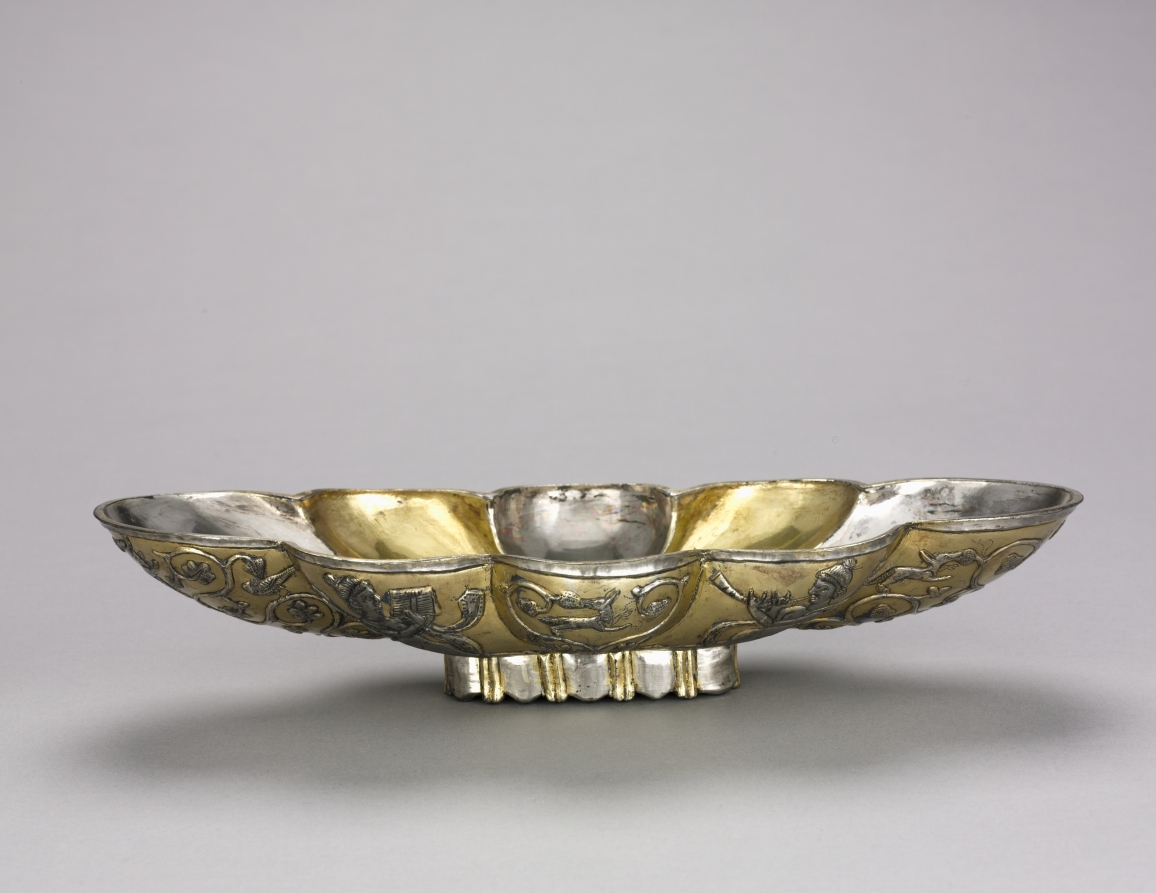
Bowl (300–500 CE) is in the Cleveland Museum of Art collection.
The work and its context
The museum's open-access catalogue describes the work:
The decoration on this bowl—a vine with a little nude, accompanied by musicians drinking wine from a rhyton—is related to the Hellenistic cult of Dionysos, or Bacchus, which was brought to Iran by the Greeks and became absorbed into the cult of Anahita.
Object facts
- Title: Bowl
- Date: 300–500 CE
- Culture: Iran, Sasanian Empire (224–651 CE)
- Type: Metalwork
- Technique: silver
- Dimensions: Overall: 6.4 x 14 cm (2 1/2 x 5 1/2 in.)
- Collection: Near Eastern Art
- Department: Egyptian and Ancient Near Eastern Art
- Accession number: 1963.478
Collection credit
John L. Severance Fund
Further reading listed by the museum
- Lee, Sherman E. “Year in Review for 1963.” The Bulletin of the Cleveland Museum of Art 50, no. 10 (December 1963): 263–294.
- Shepherd, Dorothy G. “Sasanian Art in Cleveland.” The Bulletin of the Cleveland Museum of Art 51, no. 4 (April 1964): 66–92.
View the collection record
See the museum's photographs and full catalogue entry. Catalogue text is reproduced from the Cleveland Museum of Art's open-access data, with HTML formatting removed. This object and its supplied image are designated CC0.
Sources
More in Lifestyle
Keep reading