Bowl (500–700 CE): Art, History and Details
Bowl at the Cleveland Museum of Art: 500–700 CE, silver. Explore the work's context, creator attribution and collection history.
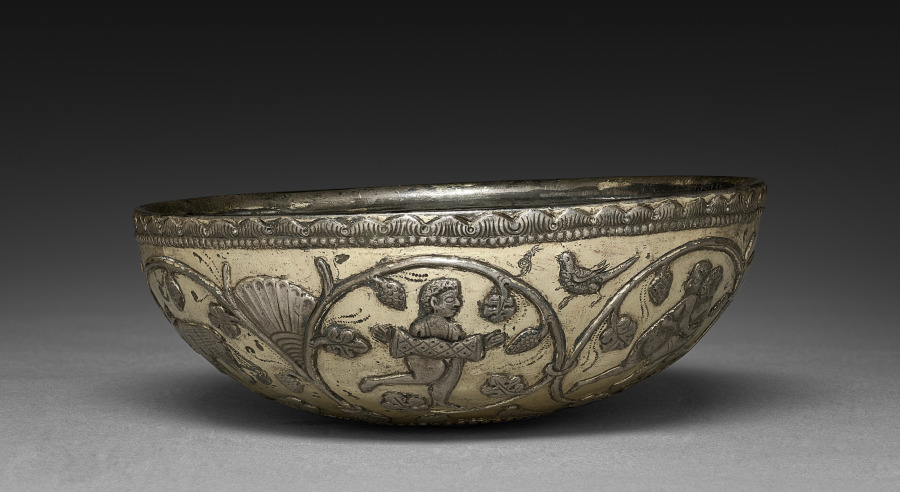
Bowl (500–700 CE) is in the Cleveland Museum of Art collection.
The work and its context
The museum's open-access catalogue describes the work:
Every good Zoroastrian was supposed to spend one-third of his day farming; one-third philosophizing; and one-third eating, resting, and at pleasure. The abundance of Sasanian luxury goods is evidence of the importance accorded the last third of the day.
Object facts
- Title: Bowl
- Date: 500–700 CE
- Culture: Iran, Sasanian Empire (224–651 CE)
- Type: Metalwork
- Technique: silver
- Dimensions: Overall: 5 x 13.4 cm (1 15/16 x 5 1/4 in.)
- Collection: Near Eastern Art
- Department: Egyptian and Ancient Near Eastern Art
- Accession number: 1966.369
Collection credit
Purchase from the J. H. Wade Fund
Further reading listed by the museum
- "Annual Report for 1966." The Bulletin of the Cleveland Museum of Art 54, no. 6 (1967).
- The Cleveland Museum of Art. Handbook of the Cleveland Museum of Art/1969. Cleveland, OH: The Cleveland Museum of Art, 1969.
- Harper, Prudence Oliver. The Royal Hunter: Art of the Sasanian Empire. New York: Asia Society, 1978.
View the collection record
See the museum's photographs and full catalogue entry. Catalogue text is reproduced from the Cleveland Museum of Art's open-access data, with HTML formatting removed. This object and its supplied image are designated CC0.
Sources
More in Lifestyle
Keep reading