Bowl: Kakiemon Ware (1 of 2) (late 1600s): Art, History and Details
Bowl: Kakiemon Ware (1 of 2) at the Cleveland Museum of Art: late 1600s, Imari ware porcelain with overglaze enamel and gold decoration. Explore the work's context, creator attribution and collection history.
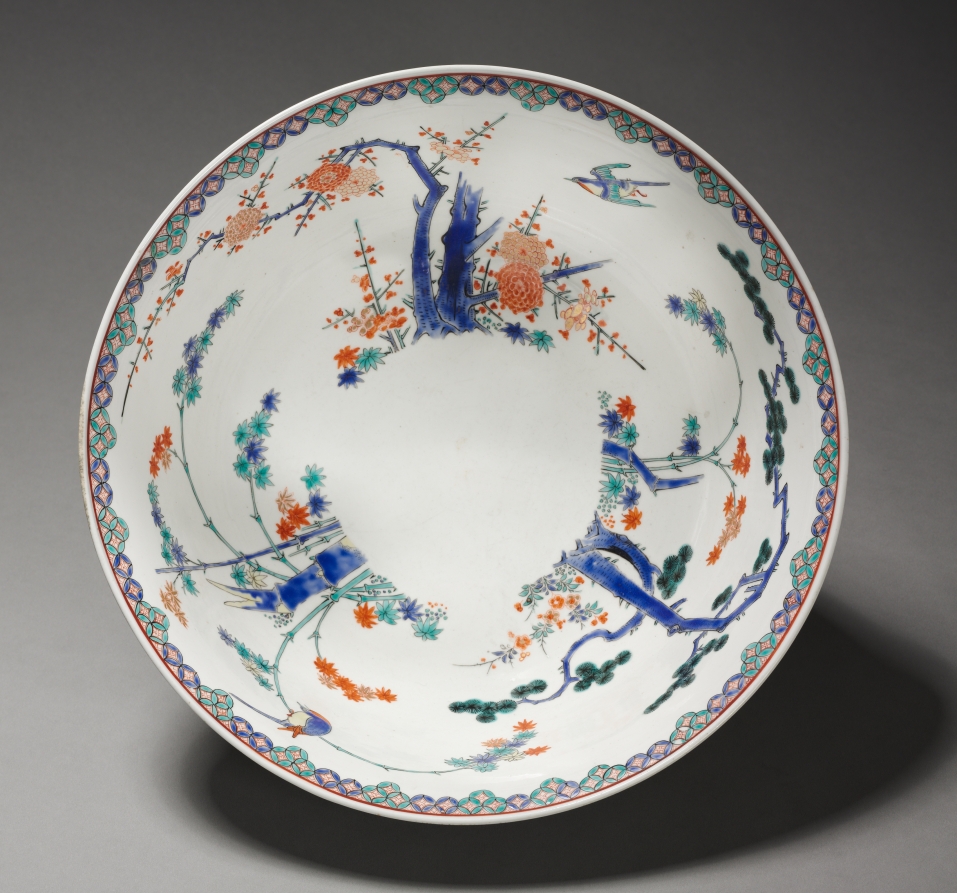
Bowl: Kakiemon Ware (1 of 2) (late 1600s) is in the Cleveland Museum of Art collection.
The work and its context
The museum's open-access catalogue describes the work:
The Chinese style of decoration identifies this bowl as a product made for the markets in England, Holland, France, and Germany. Here, kakiemon potters rearranged the Chinese literati motifs of the plum, pine, and bamboo. Such kakiemon ware inspired domestic porcelain production in Europe in the 1700s and 1800s.
Object facts
- Title: Bowl: Kakiemon Ware (1 of 2)
- Date: late 1600s
- Culture: Japan, Edo period (1615–1868)
- Type: Ceramic
- Technique: Imari ware porcelain with overglaze enamel and gold decoration
- Dimensions: Diameter: 35.6 cm (14 in.); height: 13.1 cm (5 3/16 in.)
- Collection: Japanese Art
- Department: Japanese Art
- Accession number: 1964.364.1
Collection credit
John L. Severance Fund
Further reading listed by the museum
- The Cleveland Museum of Art. Handbook of the Cleveland Museum of Art/1966. Cleveland, OH: The Cleveland Museum of Art, 1966.
- The Cleveland Museum of Art. Handbook of the Cleveland Museum of Art/1969. Cleveland, OH: The Cleveland Museum of Art, 1969.
- The Cleveland Museum of Art. Handbook of the Cleveland Museum of Art/1978. Cleveland, OH: The Cleveland Museum of Art, 1978.
View the collection record
See the museum's photographs and full catalogue entry. Catalogue text is reproduced from the Cleveland Museum of Art's open-access data, with HTML formatting removed. This object and its supplied image are designated CC0.
Sources
More in Lifestyle
Keep reading
Related stories