Bowl with Beaded Rim (300–500 CE): Art, History and Details
Bowl with Beaded Rim at the Cleveland Museum of Art: 300–500 CE, silver. Explore the work's context, creator attribution and collection history.
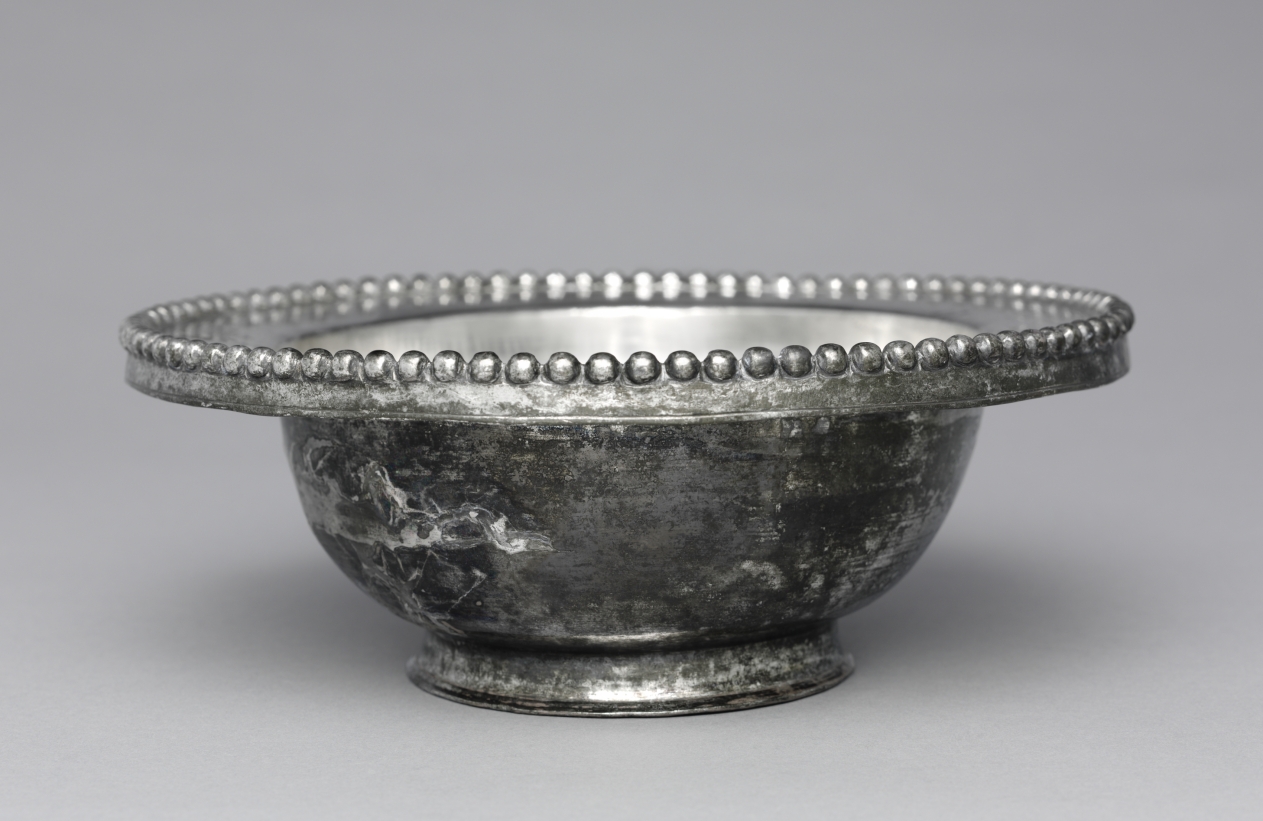
Bowl with Beaded Rim (300–500 CE) is in the Cleveland Museum of Art collection.
The work and its context
The museum's open-access catalogue describes the work:
This bowl was probably intended for use in a private home, perhaps a fashionable villa on the Mediterranean coast. Wealthy Romans stored a variety of silver vessels and implements for entertaining and enjoyed using them while eating and drinking at social events. This bowl is decorated with a beaded rim, a feature often found on domestic silver bowls of this period. The basic shape was formed first by hammering. Then the bowl was polished and chased while it turned on a lathe. The beaded decoration was achieved by hammering the silver into a mold.
Object facts
- Title: Bowl with Beaded Rim
- Date: 300–500 CE
- Culture: Byzantium, Syria(?), Byzantine period
- Type: Metalwork
- Technique: silver
- Dimensions: Overall: 10.4 x 27.8 x 10.5 cm (4 1/8 x 10 15/16 x 4 1/8 in.)
- Collection: MED - Byzantine
- Department: Medieval Art
- Accession number: 1954.259
Collection credit
Purchase from the J. H. Wade Fund
Further reading listed by the museum
- The Cleveland Museum of Art. The Cleveland Museum of Art Handbook. Cleveland, OH: The Cleveland Museum of Art, 1958.
- Milliken, William. "Early Byzantine Silver." The Bulletin of the Cleveland Museum of Art 45, no. 3 (March 1958): 35-40.
- The Cleveland Museum of Art. Handbook of the Cleveland Museum of Art/1966. Cleveland, OH: The Cleveland Museum of Art, 1966.
View the collection record
See the museum's photographs and full catalogue entry. Catalogue text is reproduced from the Cleveland Museum of Art's open-access data, with HTML formatting removed. This object and its supplied image are designated CC0.
Sources
More in Lifestyle
Keep reading