Bowl with Engraved Figures of Vices (1150–1200): Art, History and Details
Bowl with Engraved Figures of Vices at the Cleveland Museum of Art: 1150–1200, bronze: spun, hammered, chased, and punched. Explore the work's context, creator attribution and collection history.
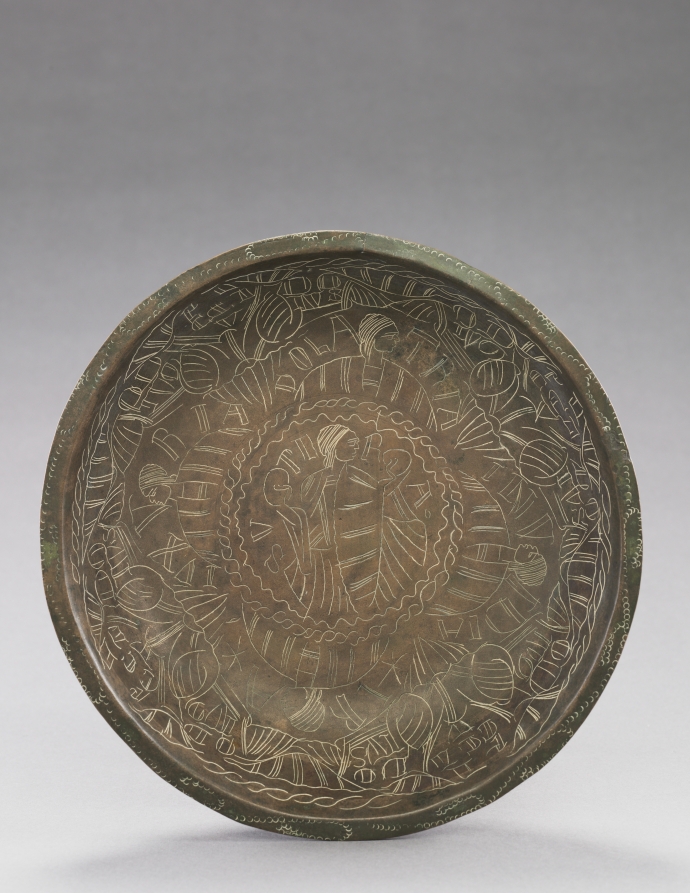
Bowl with Engraved Figures of Vices (1150–1200) is in the Cleveland Museum of Art collection.
The work and its context
The museum's open-access catalogue describes the work:
At the center of this bowl stands a female figure identified as SUPER[BI]A (pride). Represented along the curvature are four more bust-length figures: [I]DOLATRIA (idolatry), INVIDIA (envy), IRA (anger), and LUXURIA (self-indulgence). Bowls of this type were likely produced in medieval Germany and widely traded throughout northern Europe. Because of the moralistic symbolism employed in their iconographic programs, it has been suggested that such bowls were used in monasteries for hand washing during penitential activities. More recently, it has been suggested that they served as teaching aids for rhetorical instruction in medieval classrooms.
Object facts
- Title: Bowl with Engraved Figures of Vices
- Date: 1150–1200
- Culture: Germany, Gothic period, 12th century
- Type: Metalwork
- Technique: bronze: spun, hammered, chased, and punched
- Dimensions: Overall: 6.1 x 29 cm (2 3/8 x 11 7/16 in.)
- Collection: MED - Gothic
- Department: Medieval Art
- Accession number: 1987.61
Collection credit
Purchase from the J. H. Wade Fund
Further reading listed by the museum
- Gertsman, Elina and Barbara H. Rosenwein. The Middle Ages in 50 Objects. Cambridge: Cambridge University Press, 2018.
View the collection record
See the museum's photographs and full catalogue entry. Catalogue text is reproduced from the Cleveland Museum of Art's open-access data, with HTML formatting removed. This object and its supplied image are designated CC0.
Sources
More in Lifestyle
Keep reading
Related stories