Bowl with Inlaid Chrysanthemum and Lychee Design (1300s): Art, History and Details
Bowl with Inlaid Chrysanthemum and Lychee Design at the Cleveland Museum of Art: 1300s, pottery. Explore the work's context, creator attribution and collection history.
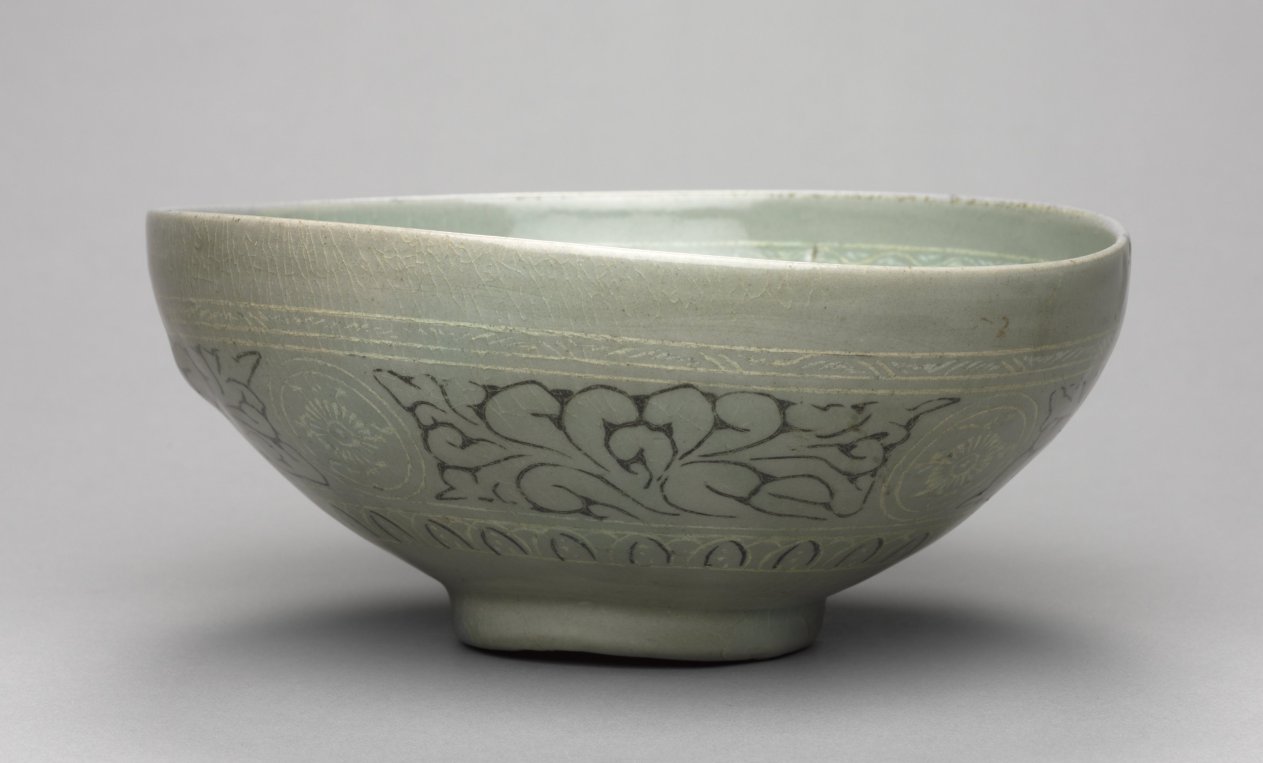
Bowl with Inlaid Chrysanthemum and Lychee Design (1300s) is in the Cleveland Museum of Art collection.
The work and its context
The museum's open-access catalogue describes the work:
As early as the seventh century, the practice of drinking tea and wine became an important part of elite leisure culture in Korea. A wide bowl like this example was especially suitable for drinking powdered tea shaved from a compressed tea cake, the most commonly enjoyed type during the Goryeo period. The outer wall is lavishly decorated with the inlaid image of flowering vines, the inner wall with the inlaid image of chrysanthemum and lychee. Such elaborate design tells us that tea wares then were aesthetically invested objects of luxury.
Object facts
- Title: Bowl with Inlaid Chrysanthemum and Lychee Design
- Date: 1300s
- Culture: Korea, Goryeo dynasty (918–1392)
- Type: Ceramic
- Technique: pottery
- Dimensions: Diameter of mouth: 20.5 cm (8 1/16 in.); Overall: 8.6 cm (3 3/8 in.)
- Collection: Korean Art
- Department: Korean Art
- Accession number: 1918.459
A detail from the museum
Kangjin and Buan kilns in Jeolla province were the two major production centers for celadon wares during the Goryeo period (918-1392).
Collection credit
Gift of John L. Severance
Further reading listed by the museum
- Warner, Lorraine D'O. "Korean Grave Pottery of the Korai Dynasty." The Bulletin of the Cleveland Museum of Art 6, no. 3 (1919): 46-58.
- Yi, Jong-min. "The New Trends on the latter 14th Century's Inlaid Celadon of Koryŏ Dynasty [14世紀後半高麗象嵌靑磁의新傾向]." Misulsahak yeongu 201(March 1994): 5-40.
- Goryeo Dynasty: Korea's Age of Enlightenment, 918-1392. San Francisco: Asian Art Museum, 2003.
View the collection record
See the museum's photographs and full catalogue entry. Catalogue text is reproduced from the Cleveland Museum of Art's open-access data, with HTML formatting removed. This object and its supplied image are designated CC0.
Sources
More in Lifestyle
Keep reading