Bowl with Trophy Heads (c. 100–650 CE): Art, History and Details
Bowl with Trophy Heads at the Cleveland Museum of Art: c. 100–650 CE, ceramic, slip. Explore the work's context, creator attribution and collection history.
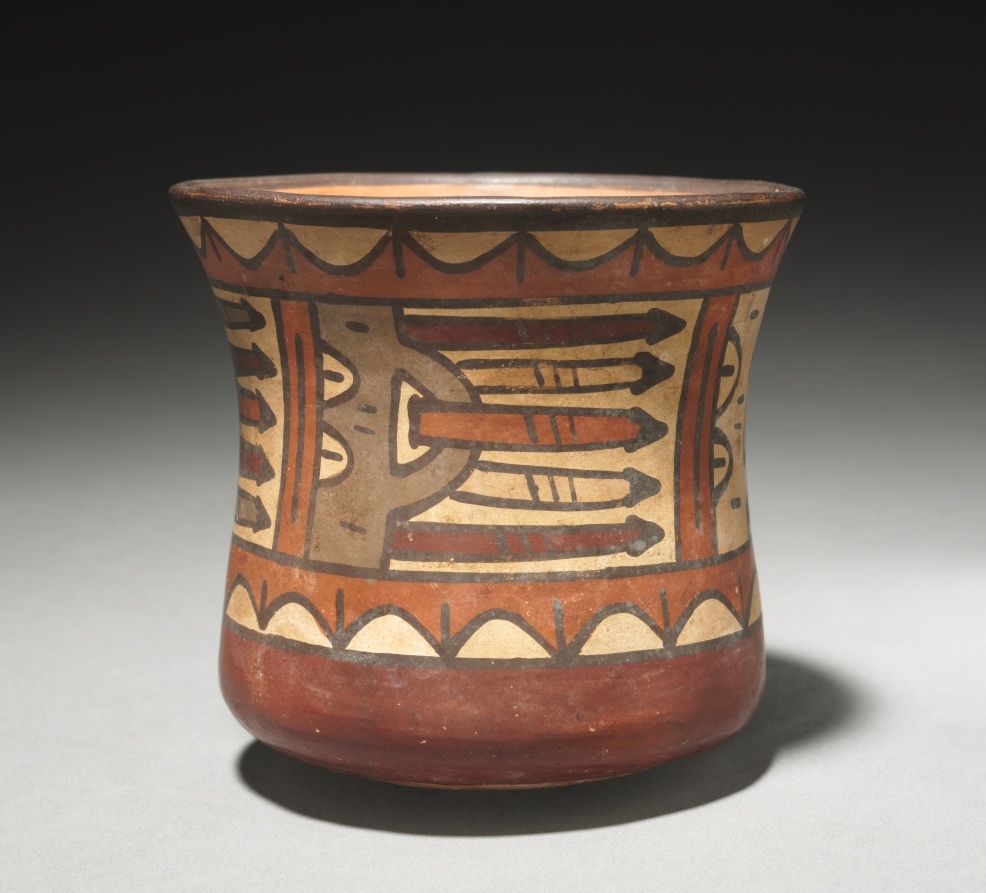
Bowl with Trophy Heads (c. 100–650 CE) is in the Cleveland Museum of Art collection.
The work and its context
The museum's open-access catalogue describes the work:
Nasca is one of the two major cultures and ceramic styles of its periods, and one of the finest ceramic styles ever produced in the South American Andes. Vessel walls are thin, firing temperatures higher than in earlier times, and a variety of warm, earthen-toned slips come into use. This small bowl features repetitions of human trophy heads—a major Nasca motif that refers both to war and fertility.
Object facts
- Title: Bowl with Trophy Heads
- Date: c. 100–650 CE
- Culture: Peru, Nasca, Early Intermediate Period
- Type: Ceramic
- Technique: ceramic, slip
- Dimensions: Overall: 10.2 x 10.2 cm (4 x 4 in.)
- Collection: AA - Andes
- Department: Art of the Americas
- Accession number: 2009.435
A detail from the museum
Two important themes in Nasca art are war and fertility.
Collection credit
Gift of Barry Bradley
View the collection record
See the museum's photographs and full catalogue entry. Catalogue text is reproduced from the Cleveland Museum of Art's open-access data, with HTML formatting removed. This object and its supplied image are designated CC0.
Sources
More in Lifestyle
Keep reading