Box in Form of Lotus Leaf (lid) (1700s): Art, History and Details
Box in Form of Lotus Leaf (lid) at the Cleveland Museum of Art: 1700s, ivory. Explore the work's context, creator attribution and collection history.
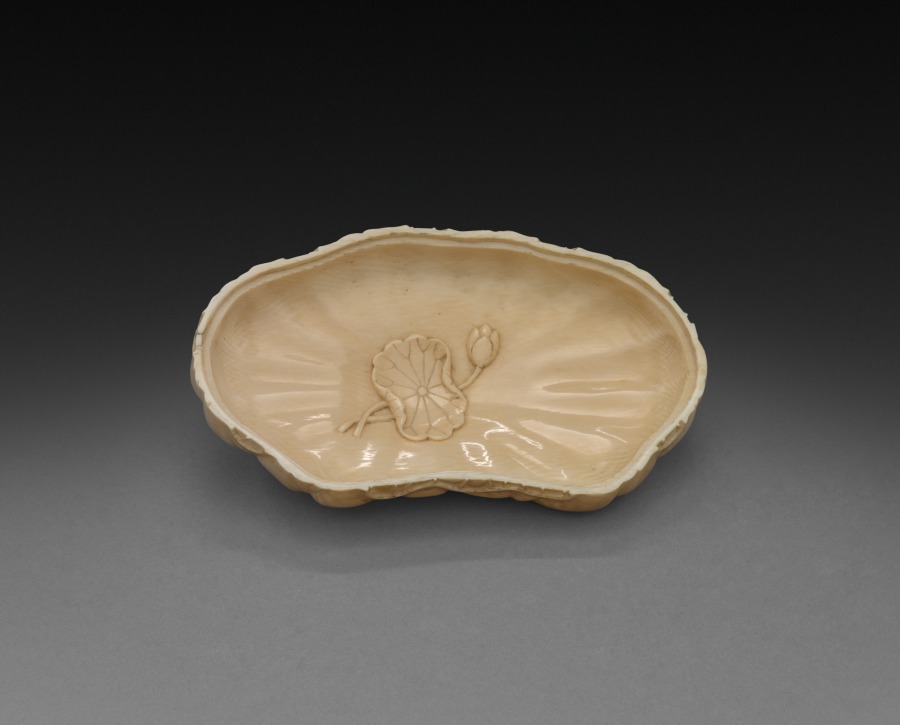
Box in Form of Lotus Leaf (lid) (1700s) is in the Cleveland Museum of Art collection.
The work and its context
The museum's open-access catalogue describes the work:
In the Qing dynasty (1644–1911), luxury items became more affordable to larger parts of the society, including women, merchants, and literati in non-official positions. Imperial patronage and a growing urban population encouraged consumption of luxury goods and local craftmanship. This fine grained, light yellow ivory carved the the shape of a lotus leaf illustrates the superb carving skills and the creative mind of the talented artisan who sought clients on a competitive market.
Object facts
- Title: Box in Form of Lotus Leaf (lid)
- Date: 1700s
- Culture: China, Qing dynasty (1644-1911)
- Type: Ivory
- Technique: ivory
- Dimensions: Overall: 5.1 cm (2 in.)
- Collection: China - Qing Dynasty
- Department: Chinese Art
- Accession number: 1970.137.2.b
A detail from the museum
Inside each box is a lotus pond and two swimming ducks carved in high relief.
Collection credit
Gift of Lois Clarke
Further reading listed by the museum
- Lee, Sherman E. “The Year in Review for 1970.” The Bulletin of the Cleveland Museum of Art 58, no. 2 (1971): 22–71.
- Waston, William, ed. Chinese Ivories: From the Shang to the Qing : an Exhibition. [London]: The Oriental Ceramic Society, 1984.
View the collection record
See the museum's photographs and full catalogue entry. Catalogue text is reproduced from the Cleveland Museum of Art's open-access data, with HTML formatting removed. This object and its supplied image are designated CC0.
Sources
More in Lifestyle
Keep reading