Brahma (c. 1890): Art, History and Details
Brahma at the Cleveland Museum of Art: c. 1890, Gum tempera, graphite, ink, and tin on paper. Explore the work's context, creator attribution and collection history.
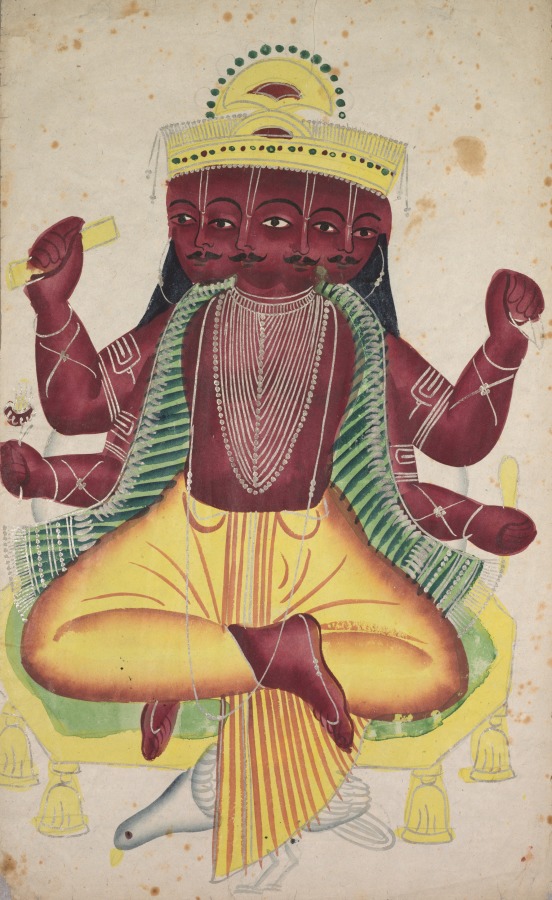
Brahma (c. 1890) is in the Cleveland Museum of Art collection.
The work and its context
The museum's open-access catalogue describes the work:
The god of creation has four arms and four heads. The manuscript in his upper right hand indicates that he is the source of sacred knowledge as the quintessential Brahman. The lotus flower in his lower right hand references birth and procreation. He would typically hold a rosary and water pot in his left hands, which are here difficult to clearly identify given the cursory style of Kalighat painitngs. His mount, the goose, examines the ground at his feet.
Object facts
- Title: Brahma
- Date: c. 1890
- Culture: Eastern India, Bengal, Kolkata, Kalighat
- Type: Painting
- Technique: Gum tempera, graphite, ink, and tin on paper
- Dimensions: Painting: 45.1 x 27.7 cm (17 3/4 x 10 7/8 in.)
- Collection: Indian Art
- Department: Indian and Southeast Asian Art
- Accession number: 2003.148
A detail from the museum
Brahma once had five heads, but the god Shiva decapitated one of them.
Collection credit
Gift of William E. Ward in memory of his wife, Evelyn Svec Ward
View the collection record
See the museum's photographs and full catalogue entry. Catalogue text is reproduced from the Cleveland Museum of Art's open-access data, with HTML formatting removed. This object and its supplied image are designated CC0.
Sources
More in Lifestyle
Keep reading



