Broad Collar (1900–1916): Art, History and Details
Broad Collar at the Cleveland Museum of Art: 1900–1916, faience, glass, and stone, modern stringing. Explore the work's context, creator attribution and collection history.
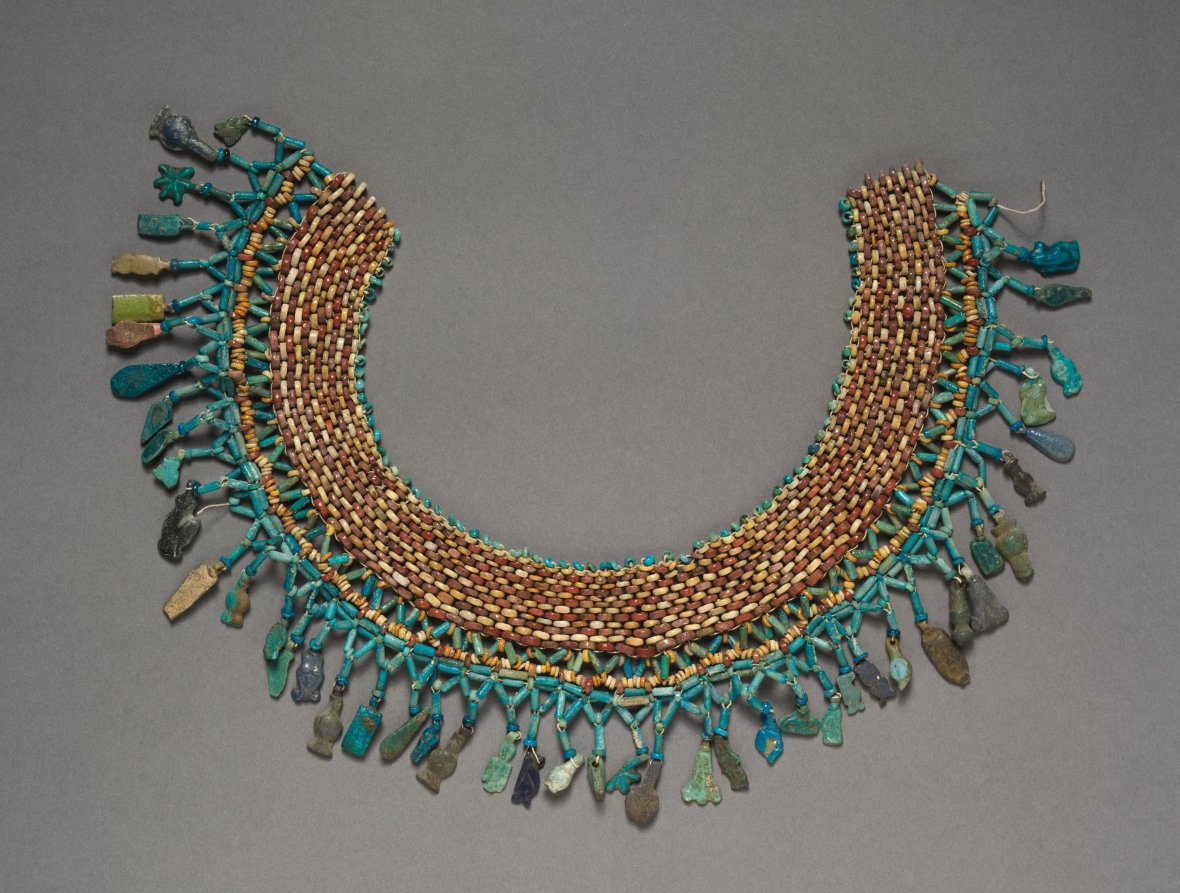
Broad Collar (1900–1916) is in the Cleveland Museum of Art collection.
The work and its context
The museum's open-access catalogue describes the work:
Jewelry, an important element of ancient Egyptian culture, encompassed a variety of materials, such as glass, gems, and precious substances, including faience and other ceramics. Some ancient Egyptian jewelry helped provide spiritual protection in life and death, most notably scarab amulets, which represent Khepri, the early morning sun god connected with resurrection. As seen in the silhouettes of both Chanel necklaces, the wesekh, or broad-collar necklace, is often referenced in modern and contemporary fashion. This was donned by members of the ancient Egyptian elite and often shown in depictions of deities, highlighting the hierarchy of access to such fine jewelry.
Object facts
- Title: Broad Collar
- Date: 1900–1916
- Culture: Egypt, Style of late Dynasty 18 but essentially modern
- Type: Jewelry
- Technique: faience, glass, and stone, modern stringing
- Dimensions: Diameter: 20.5 cm (8 1/16 in.); Overall: 25 cm (9 13/16 in.)
- Collection: Egypt - Modern Forgery
- Department: Egyptian and Ancient Near Eastern Art
- Accession number: 1916.660
Collection credit
Gift of Mr. and Mrs. J. H. Wade
Further reading listed by the museum
- Berman, Lawrence M., and Kenneth J. Bohač. Catalogue of Egyptian Art: The Cleveland Museum of Art. Cleveland, OH: Cleveland Museum of Art, 1999
View the collection record
See the museum's photographs and full catalogue entry. Catalogue text is reproduced from the Cleveland Museum of Art's open-access data, with HTML formatting removed. This object and its supplied image are designated CC0.
Sources
More in Lifestyle
Keep reading


