Buland Darwaza with Figure (1858–62): Art, History and Details
Buland Darwaza with Figure at the Cleveland Museum of Art: 1858–62, waxed paper negative. Explore the work's context, creator attribution and collection history.
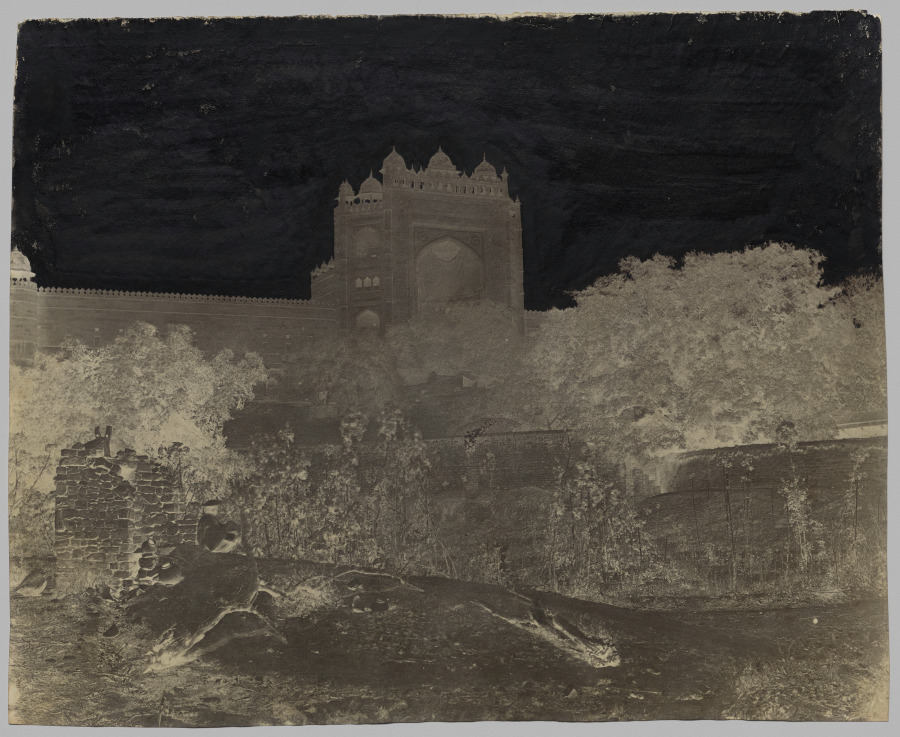
Buland Darwaza with Figure (1858–62) is in the Cleveland Museum of Art collection. The museum's creator attribution is Dr. John Murray (Scottish, 1809–1898).
The work and its context
The museum's open-access catalogue describes the work:
This gateway is the entrance to the Great Mosque at Fatehpur Sikri, not far from where John Murray was stationed for half of his four decades in India. Murray was by profession a doctor in the army of the East India Company, a British trading company that ruled much of India from 1757–1858. He took up photography in 1849 and made it his personal mission to photograph the many famous buildings in the region.
Object facts
- Title: Buland Darwaza with Figure
- Date: 1858–62
- Creator attribution: Dr. John Murray (Scottish, 1809–1898)
- Culture: England
- Type: Photograph
- Technique: waxed paper negative
- Dimensions: Image: 37.5 x 46.5 cm (14 3/4 x 18 5/16 in.); Paper: 37.5 x 46.5 cm (14 3/4 x 18 5/16 in.)
- Collection: PH - British 19th Century
- Department: Photography
- Accession number: 2021.203
A detail from the museum
The Buland Darwaza, or “high gate,” was built in 1575 by Mughal emperor Akbar and is said to be the tallest gate in the world.
Collection credit
Gift of William and Margaret Lipscomb
View the collection record
See the museum's photographs and full catalogue entry. Catalogue text is reproduced from the Cleveland Museum of Art's open-access data, with HTML formatting removed. This object and its supplied image are designated CC0.
Sources
More in Lifestyle
Keep reading