Bust of Ankh-Hor (525–404 BCE): Art, History and Details
Bust of Ankh-Hor at the Cleveland Museum of Art: 525–404 BCE, basalt. Explore the work's context, creator attribution and collection history.
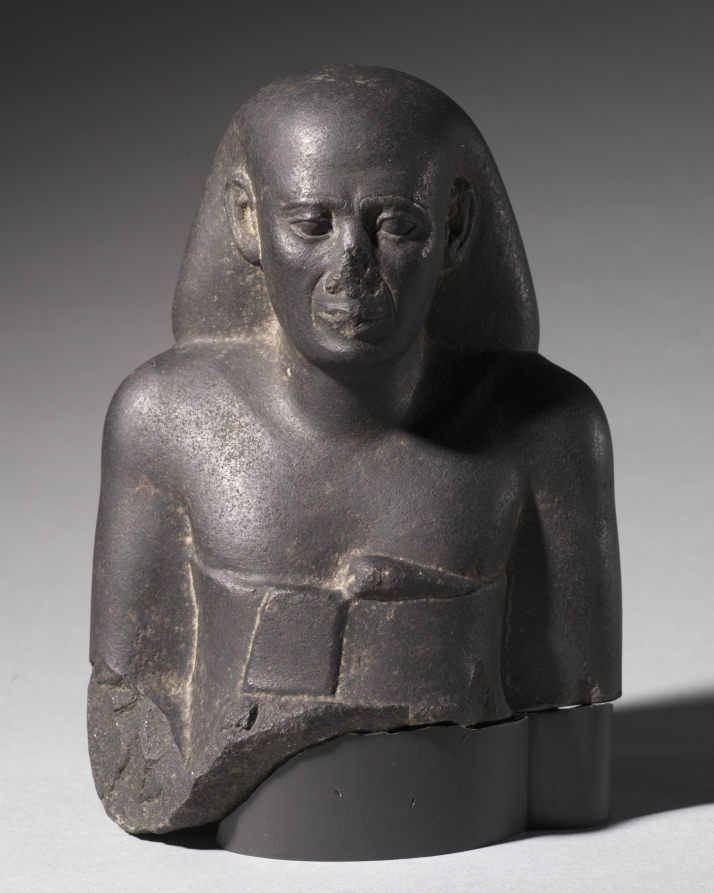
Bust of Ankh-Hor (525–404 BCE) is in the Cleveland Museum of Art collection.
The work and its context
The museum's open-access catalogue describes the work:
This bust of Ankh-Hor comprises the top portion of a temple statue. From the position of the arms, it is evident that it originally belonged to a striding figure holding a naos, or shrine, containing the image of a deity. His high-waisted wraparound robe, fashionable during the Persian period (Dynasty 27) when this figure was carved, would have reached to his ankles.
Object facts
- Title: Bust of Ankh-Hor
- Date: 525–404 BCE
- Culture: Egypt, Late period (715–332 BCE), Dynasty 27
- Type: Sculpture
- Technique: basalt
- Dimensions: Overall: 21.5 x 15 cm (8 7/16 x 5 7/8 in.)
- Collection: Egypt - Late Period
- Department: Egyptian and Ancient Near Eastern Art
- Accession number: 1914.662
A detail from the museum
The black volcanic basalt stone imparts a sleek appearance to this revered temple statue.
Collection credit
Gift of the John Huntington Art and Polytechnic Trust
Further reading listed by the museum
- Bianchi, Robert Steven. "Collecting and Collectors, Egyptian Style." The Bulletin of the Cleveland Museum of Art 79, no. 5 (1992): 144-51.
- Berman, Lawrence M., and Kenneth J. Bohač. Catalogue of Egyptian Art: The Cleveland Museum of Art. Cleveland, OH: Cleveland Museum of Art, 1999
View the collection record
See the museum's photographs and full catalogue entry. Catalogue text is reproduced from the Cleveland Museum of Art's open-access data, with HTML formatting removed. This object and its supplied image are designated CC0.
Sources
More in Lifestyle
Keep reading
Related stories


