Calligraphy in Semi-Cursive Style (xing-caoshu) (c. 1660–1709): Art, History and Details
Calligraphy in Semi-Cursive Style (xing-caoshu) at the Cleveland Museum of Art: c. 1660–1709, Hanging scroll; ink on paper. Explore the work's context, creator attribution and collection history.
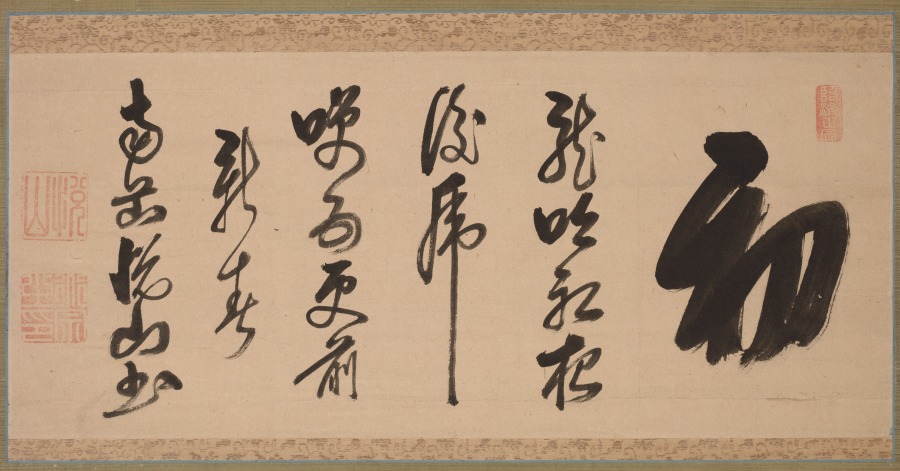
Calligraphy in Semi-Cursive Style (xing-caoshu) (c. 1660–1709) is in the Cleveland Museum of Art collection. The museum's creator attribution is Yueshan Daozong (Chinese, 1629–1709).
The work and its context
The museum's open-access catalogue describes the work:
This spontaneous, bold calligraphy style is characteristic of members of the Japanese Ōbaku school (Huangbo in Chinese) of Chan (Zen in Japanese) Buddhism, which was founded in Japan by Chinese monks in the 1600s. The monk Yueshan emigrated to Japan from the Chinese province of Fujian, taking a priestly post at Manpukuji, the headquarters of the Ōbaku school in Japan. He later became the seventh abbot of the distinguished temple. Yueshan’s calligraphy features rounded characters that allow him to fuse strokes and characters in speedy brush movements. Here the text begins with the large character chu (初, “the beginning”), the initial focus of meditation on the text: The dragon murmurs after sunset. The tiger roars before dawn.
Object facts
- Title: Calligraphy in Semi-Cursive Style (xing-caoshu)
- Date: c. 1660–1709
- Creator attribution: Yueshan Daozong (Chinese, 1629–1709)
- Culture: China, Qing dynasty (1644–1911)
- Type: Calligraphy
- Technique: Hanging scroll; ink on paper
- Dimensions: Image: 28.6 x 64.1 cm (11 1/4 x 25 1/4 in.); Overall with knobs: 115.6 x 73.8 cm (45 1/2 x 29 1/16 in.)
- Collection: ASIAN - Hanging scroll
- Department: Chinese Art
- Accession number: 2003.353
A detail from the museum
Ōbaku-style calligraphy favors rounded—rather than angular—brushstrokes. It is not a subtle style of calligraphy, as the Chan monks preferred a bold approach.
Collection credit
Gift of Mr. and Mrs. Robert T. Gow
Further reading listed by the museum
- Chang, Willow Hai. Song of Life: Chinese Art from the Gow Family Collection. Naples, FL: Naples Museum of Art, 2000.
- Yu, Jing 余靜. “Introduction of Huangbo Calligraphy and Paintings in the Cleveland Museum of Art Collection in the United States = 美國克利夫蘭藝術博物館所藏黃檗書畫譯介.” Research on Fujian Merchant Culture: Special Issue on Huangbo (Ōbaku) Studies 闽商文化研究 黄檗学 特刊(黄檗艺术号) 0105 (2023): 49–53.
View the collection record
See the museum's photographs and full catalogue entry. Catalogue text is reproduced from the Cleveland Museum of Art's open-access data, with HTML formatting removed. This object and its supplied image are designated CC0.
Sources
More in Lifestyle
Keep reading