Calligraphy (verso) (c. 1640–60): Art, History and Details
Calligraphy (verso) at the Cleveland Museum of Art: c. 1640–60, Gum tempera, ink, and gold on paper. Explore the work's context, creator attribution and collection history.
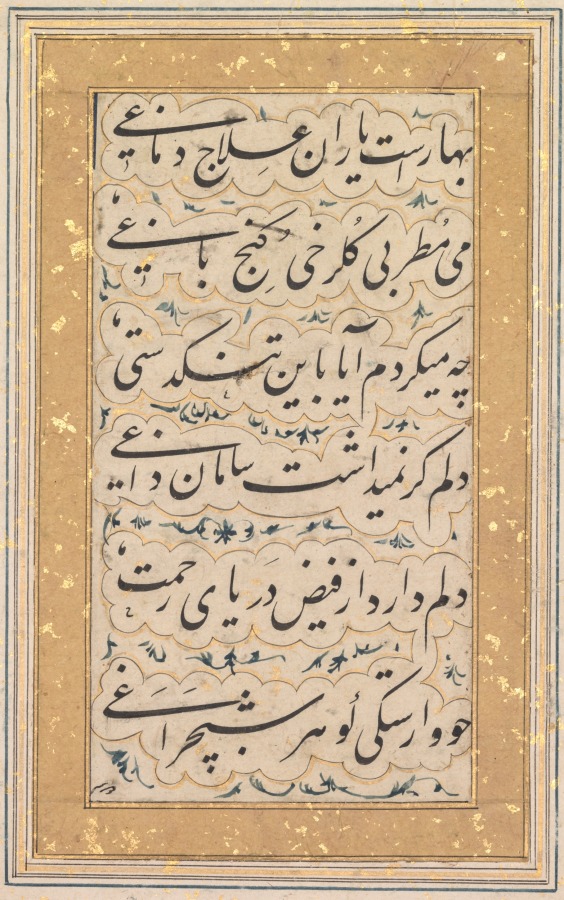
Calligraphy (verso) (c. 1640–60) is in the Cleveland Museum of Art collection.
The work and its context
The museum's open-access catalogue describes the work:
The text of the poem praises the season of spring, with mystical undertones. The Persian verses are written from right to left in the cursive form of Arabic script known as nasta‘liq. "It is springtime friends! Time to nurse the carnal wants: Wine, a minstrel, a pretty face, a secluded corner in a garden. What would I have done given my lack of means, If my heart did not have a cure for searing longings? My heart derives from the bounteous Sea of Compassion Its self-abnegating otherworldliness, an ever-radiant night glowing gem." The poem may be related to the painting of the African musician on the other side, subtly perpetuating the stereotypical association of African men with lustful desires, music, and dance.
Object facts
- Title: Calligraphy (verso)
- Date: c. 1640–60
- Culture: India, Deccan, 17th century
- Type: Painting
- Technique: Gum tempera, ink, and gold on paper
- Dimensions: Page: 40.5 x 28.9 cm (15 15/16 x 11 3/8 in.)
- Collection: Indian Art
- Department: Indian and Southeast Asian Art
- Accession number: 2013.289.b
Collection credit
Gift in honor of Madeline Neves Clapp; Gift of Mrs. Henry White Cannon by exchange; Bequest of Louise T. Cooper; Leonard C. Hanna Jr. Fund; From the Catherine and Ralph Benkaim Collection
View the collection record
See the museum's photographs and full catalogue entry. Catalogue text is reproduced from the Cleveland Museum of Art's open-access data, with HTML formatting removed. This object and its supplied image are designated CC0.
Sources
More in Lifestyle
Keep reading
Related stories