Candelabrum (100–1 BCE): Art, History and Details
Candelabrum at the Cleveland Museum of Art: 100–1 BCE, bronze. Explore the work's context, creator attribution and collection history.
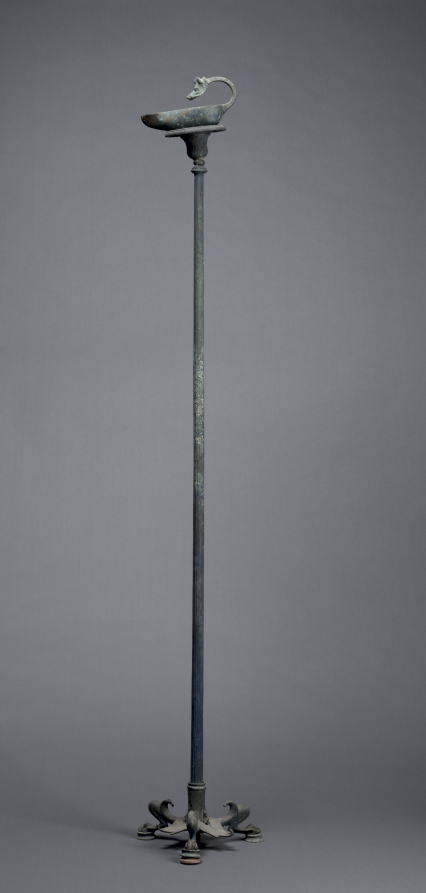
Candelabrum (100–1 BCE) is in the Cleveland Museum of Art collection.
The work and its context
The museum's open-access catalogue describes the work:
This bronze is a candelabrum, or ancient lamp stand. A long, fluted column extends from a base on lion or panther paw feet, with ivy leaves between. Atop the column sits a miniature bronze krater, a mixing vessel for wine, with a circular top which supports a separately made lamp. Wealthy Romans would light their homes with bronze oil lamps. The small, portable lamps would be placed on lampstands like this one to light larger spaces.
Object facts
- Title: Candelabrum
- Date: 100–1 BCE
- Culture: Italy, Roman
- Type: Sculpture
- Technique: bronze
- Dimensions: Overall: 137.4 cm (54 1/8 in.)
- Collection: GR - Roman
- Department: Greek and Roman Art
- Accession number: 1953.11
A detail from the museum
This lamp and stand were not found together, but illustrate how they would have been used in antiquity.
Collection credit
Purchase from the J. H. Wade Fund
Further reading listed by the museum
- Milliken, William M. “Part II. Annual Report Issue for the Year 1953.” The Bulletin of the Cleveland Museum of Art 41, no. 6 (1954): 131–74.
View the collection record
See the museum's photographs and full catalogue entry. Catalogue text is reproduced from the Cleveland Museum of Art's open-access data, with HTML formatting removed. This object and its supplied image are designated CC0.
Sources
More in Lifestyle
Keep reading