Candlestand in the Shape of a Chimera Bixie (265–316 CE): Art, History and Details
Candlestand in the Shape of a Chimera Bixie at the Cleveland Museum of Art: 265–316 CE, Glazed stoneware with molded and incised decoration, Yue ware. Explore the work's context, creator attribution and collection history.
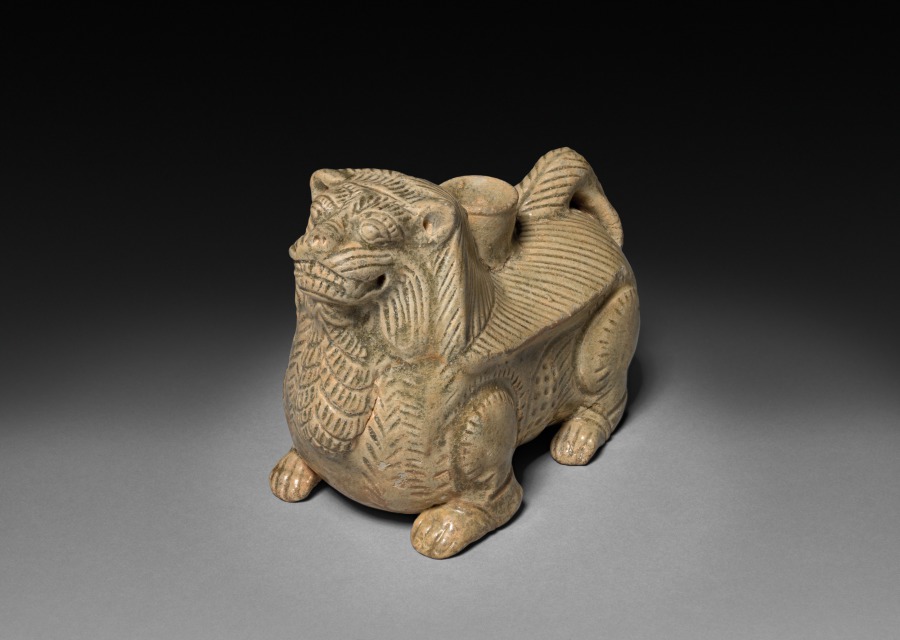
Candlestand in the Shape of a Chimera Bixie (265–316 CE) is in the Cleveland Museum of Art collection.
The work and its context
The museum's open-access catalogue describes the work:
The candlestand in the shape of a chimera or bixie (a fantastical hybrid creature that was believed to ward off evil spirits) was molded in two parts. Incisions on both sides of the feline body suggest wings. Stone bixie placed in front of tomb entrances are prominent among the Six Dynasties kings buried in Nanjing. Candlestands in the form of chimera were found in tombs but may have been used in daily life too.
Object facts
- Title: Candlestand in the Shape of a Chimera Bixie
- Date: 265–316 CE
- Culture: China, Western Jin dynasty (265-316 CE)
- Type: Ceramic
- Technique: Glazed stoneware with molded and incised decoration, Yue ware
- Dimensions: Overall: 8.3 cm (3 1/4 in.)
- Collection: China - Southern Dynasties
- Department: Chinese Art
- Accession number: 1983.77
Collection credit
John L. Severance Fund
Further reading listed by the museum
- Griswold, William, Xiaofei Tian, Richard Von Glahn, Feng Zhao, S. J. Vainker, Masaaki Itakura, Jiang Wu, et al. China’s Southern Paradise: Treasures from the Lower Yangzi Delta. Edited by Clarissa Von Spee. Cleveland, OH: The Cleveland Museum of Art, 2023.
View the collection record
See the museum's photographs and full catalogue entry. Catalogue text is reproduced from the Cleveland Museum of Art's open-access data, with HTML formatting removed. This object and its supplied image are designated CC0.
Sources
More in Lifestyle
Keep reading