Carved Bowl (1200–300 BCE): Art, History and Details
Carved Bowl at the Cleveland Museum of Art: 1200–300 BCE, stone (travertine). Explore the work's context, creator attribution and collection history.
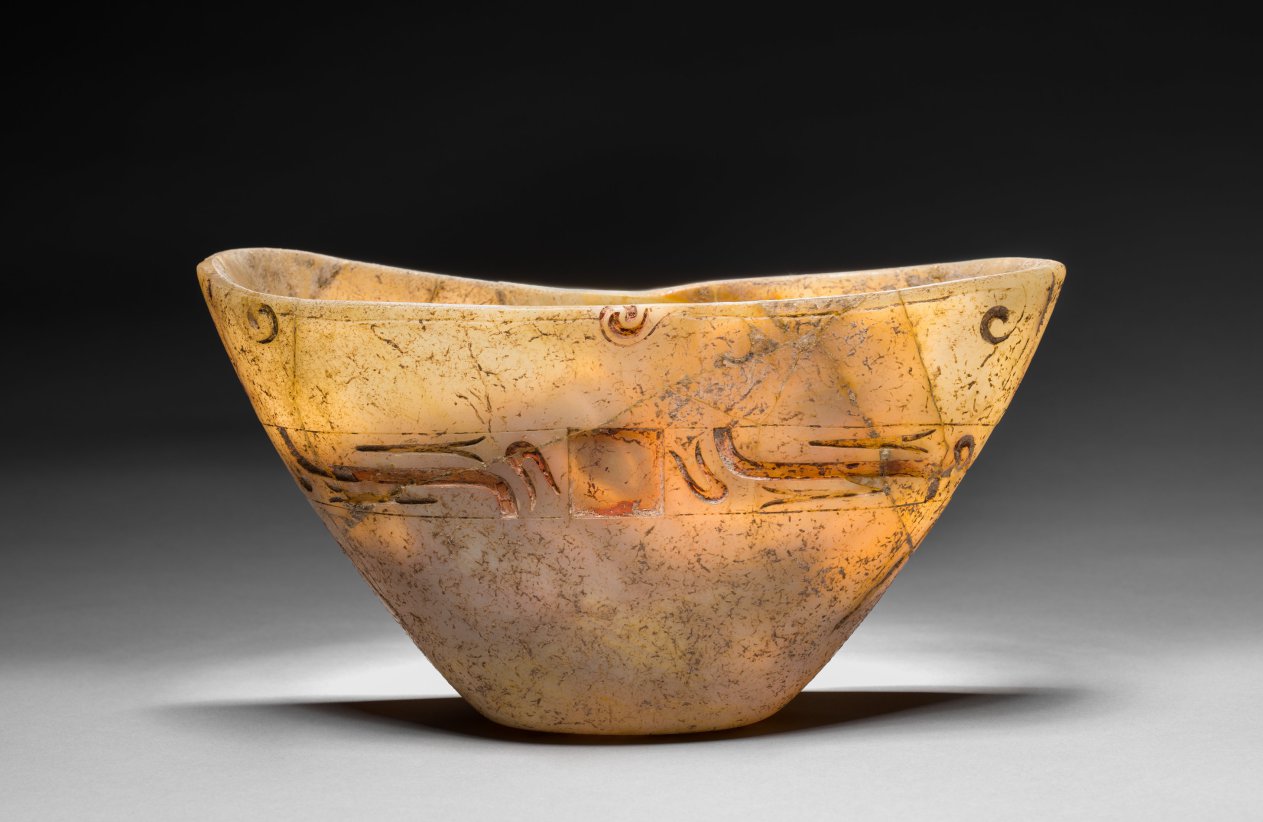
Carved Bowl (1200–300 BCE) is in the Cleveland Museum of Art collection.
The work and its context
The museum's open-access catalogue describes the work:
Containers made of translucent white travertine, known among the later Aztecs as tecali, are rare in Olmec artistic production. The shape of this elegant example, its rim pinched inward at the center, may refer to a squash. The meaning of the deeply carved abstract motifs, which retain traces of red pigment, is unknown. The bowl is said to have been found in a burial cache that included an Olmec figurine, a hematite mirror, and jade ornaments in Guerrero, Mexico.
Object facts
- Title: Carved Bowl
- Date: 1200–300 BCE
- Culture: Mesoamerica, reportedly the Tepecoacuilco River Valley, Guerrero, Olmec style (1200-300 BC), Formative Period
- Type: Stone
- Technique: stone (travertine)
- Dimensions: Overall: 13.3 x 23.5 x 10.2 cm (5 1/4 x 9 1/4 x 4 in.)
- Collection: AA - Mesoamerica
- Department: Art of the Americas
- Accession number: 2013.29
A detail from the museum
Travertine is a type of limestone deposit commonly found in caves and hot springs.
Collection credit
John L. Severance Fund
Further reading listed by the museum
- Bergh, Susan E. “2013 Acquisitions: Pre-Columbian Art.” Cleveland Art: Cleveland Museum of Art Members Magazine 54, no. 2 (March/April 2014): 23.
View the collection record
See the museum's photographs and full catalogue entry. Catalogue text is reproduced from the Cleveland Museum of Art's open-access data, with HTML formatting removed. This object and its supplied image are designated CC0.
Sources
More in Lifestyle
Keep reading