Carved Bracket (1600s): Art, History and Details
Carved Bracket at the Cleveland Museum of Art: 1600s, Ivory with traces of pigment. Explore the work's context, creator attribution and collection history.
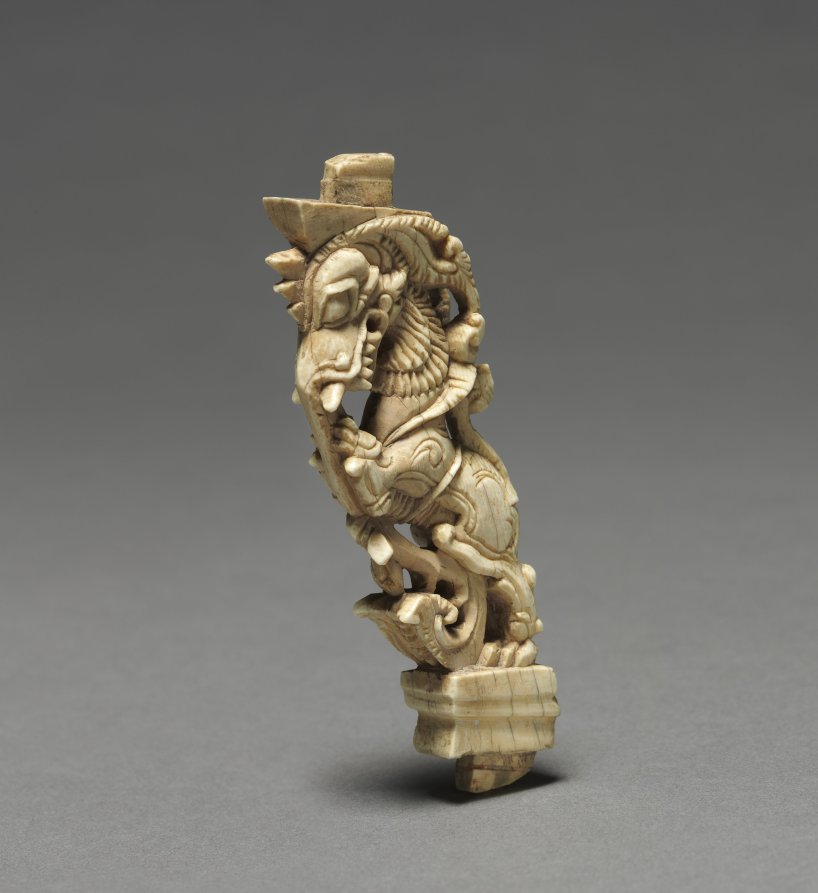
Carved Bracket (1600s) is in the Cleveland Museum of Art collection.
The work and its context
The museum's open-access catalogue describes the work:
Composite creatures with the body of a lion, tusks and trunk of an elephant, and horns of an antelope are standard elements of medieval Indian architecture and furniture. Traces of pigment indicate that these ivory furniture facings were brightly painted.
Object facts
- Title: Carved Bracket
- Date: 1600s
- Culture: South India, probably Madurai
- Type: Ivory
- Technique: Ivory with traces of pigment
- Dimensions: Overall: 10.2 cm (4 in.)
- Collection: Indian Art
- Department: Indian and Southeast Asian Art
- Accession number: 1972.282.2
A detail from the museum
These composite beasts are called yali or vyala.
Collection credit
Bequest of Edgar A. Hahn
View the collection record
See the museum's photographs and full catalogue entry. Catalogue text is reproduced from the Cleveland Museum of Art's open-access data, with HTML formatting removed. This object and its supplied image are designated CC0.
Sources
More in Lifestyle
Keep reading