Casket (late 1100s–1200s): Art, History and Details
Casket at the Cleveland Museum of Art: late 1100s–1200s, fritware with molded design under glaze. Explore the work's context, creator attribution and collection history.
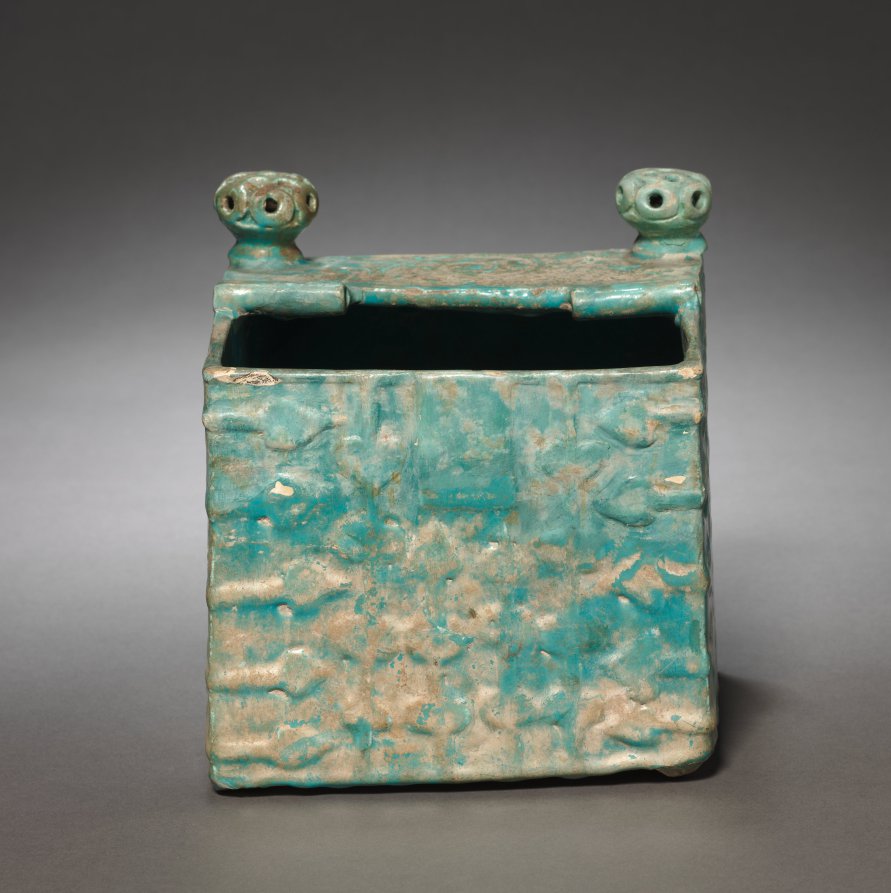
Casket (late 1100s–1200s) is in the Cleveland Museum of Art collection.
The work and its context
The museum's open-access catalogue describes the work:
This square fritware box originally had a with hinged top. It is covered on the inside and outside with opaque turquoise glaze. The top back corners of the casket are surmounted by small openwork knobs. The casket would have rested on four feet, which have been lost. This is a ceramic imitation of a wooden box with metal fittings. The relief ornament imitates metal straps and a lock fitting.
Object facts
- Title: Casket
- Date: late 1100s–1200s
- Culture: Syria (Raqqa), Ayyubid Period
- Type: Ceramic
- Technique: fritware with molded design under glaze
- Dimensions: Overall: 20.4 x 18 x 15.5 cm (8 1/16 x 7 1/16 x 6 1/8 in.)
- Collection: Islamic Art
- Department: Islamic Art
- Accession number: 1915.652
Collection credit
Gift of the John Huntington Art and Polytechnic Trust
View the collection record
See the museum's photographs and full catalogue entry. Catalogue text is reproduced from the Cleveland Museum of Art's open-access data, with HTML formatting removed. This object and its supplied image are designated CC0.
Sources
More in Lifestyle
Keep reading