Celadon Bowl (1200s): Art, History and Details
Celadon Bowl at the Cleveland Museum of Art: 1200s, Celadon. Explore the work's context, creator attribution and collection history.
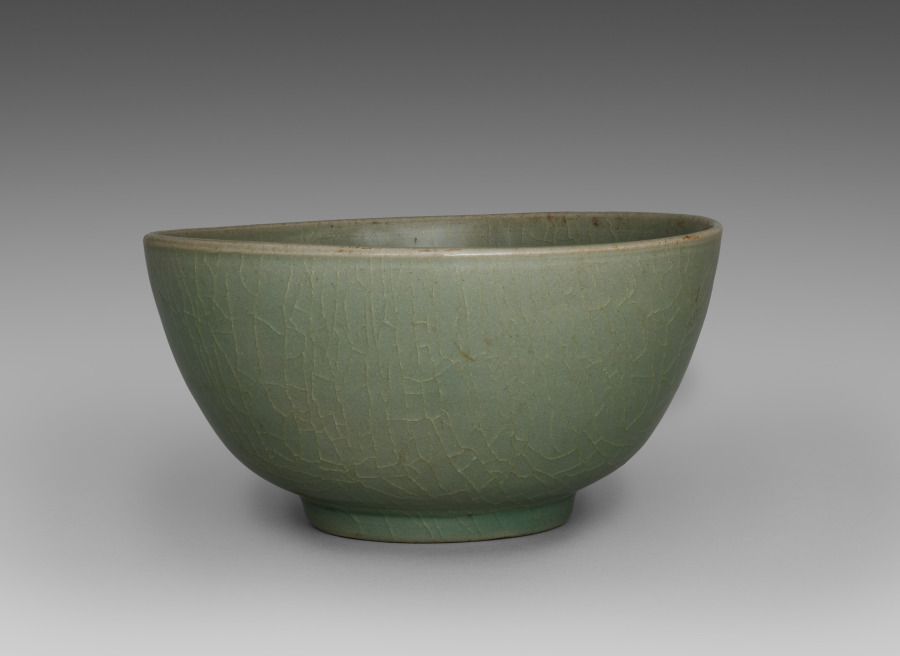
Celadon Bowl (1200s) is in the Cleveland Museum of Art collection.
The work and its context
The museum's open-access catalogue describes the work:
As early as the seventh century, the practice of drinking tea and wine became an important part of elite leisure culture in Korea. A wide bowl like this example was especially suitable for drinking powdered tea shaved from a compressed tea cake, the most commonly enjoyed type during the Goryeo period.
Object facts
- Title: Celadon Bowl
- Date: 1200s
- Culture: Korea, Goryeo dynasty (918–1392)
- Type: Ceramic
- Technique: Celadon
- Dimensions: height: 8 cm (3 1/8 in.); Diameter of rim: 16 cm (6 5/16 in.); Diameter of base: 7.3 cm (2 7/8 in.)
- Collection: Korean Art
- Department: Korean Art
- Accession number: 2025.179
A detail from the museum
Crackling occurs when the glaze contracts more rapidly than the clay body during the firing process. In the context of celadon bowls, this phenomenon is not regarded as a flaw but rather as a highly valued aesthetic feature—one that evokes a sense of age.
Collection credit
Gift of Mr. Sang-goo Kong in Honor of his father Mr. Chang-ho Kong
View the collection record
See the museum's photographs and full catalogue entry. Catalogue text is reproduced from the Cleveland Museum of Art's open-access data, with HTML formatting removed. This object and its supplied image are designated CC0.
Sources
More in Lifestyle
Keep reading
Related stories