Celt-Shaped Pendant (c. 300 BCE–600 CE): Art, History and Details
Celt-Shaped Pendant at the Cleveland Museum of Art: c. 300 BCE–600 CE, jadeite. Explore the work's context, creator attribution and collection history.
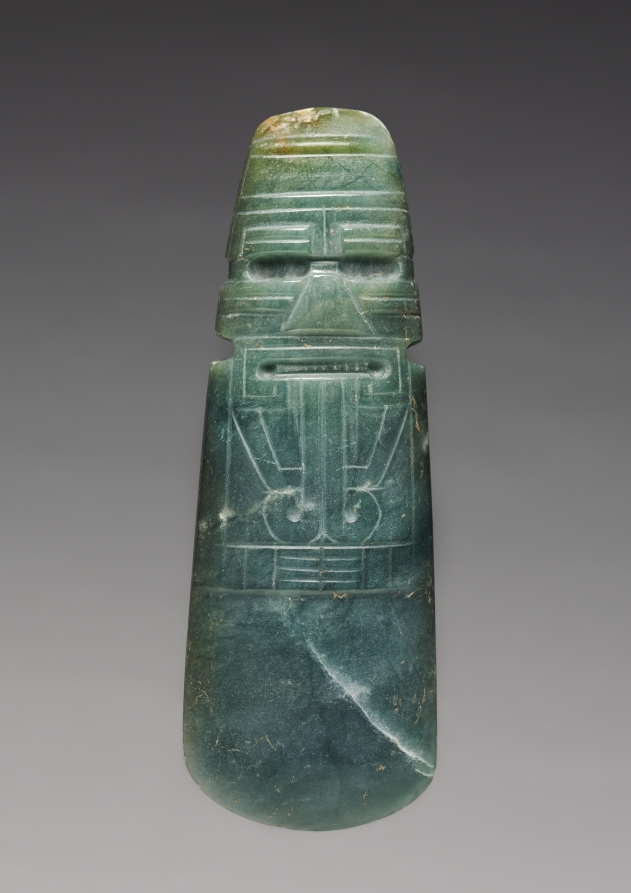
Celt-Shaped Pendant (c. 300 BCE–600 CE) is in the Cleveland Museum of Art collection.
The work and its context
The museum's open-access catalogue describes the work:
Costa Rican jade pendants may imitate the shape of axe blades (celts) used for agriculture. The pendants often take the form of "axe gods," creatures with human, bird, or animal traits. Jade carving was common in Costa Rica before ad 500, but then declined in importance. Gold eventually replaced jade as the region’s preferred luxury material.
Object facts
- Title: Celt-Shaped Pendant
- Date: c. 300 BCE–600 CE
- Culture: Costa Rica, Southern Nicoya region
- Type: Jewelry
- Technique: jadeite
- Dimensions: Overall: 15.2 x 5.4 cm (6 x 2 1/8 in.)
- Collection: AA - Intermediate Region
- Department: Art of the Americas
- Accession number: 1972.4
Collection credit
James Albert and Mary Gardiner Ford Memorial Fund
View the collection record
See the museum's photographs and full catalogue entry. Catalogue text is reproduced from the Cleveland Museum of Art's open-access data, with HTML formatting removed. This object and its supplied image are designated CC0.
Sources
More in Lifestyle
Keep reading