Ceramic dish with deer, phoenix, and lotus blossoms (1300–1350): Art, History and Details
Ceramic dish with deer, phoenix, and lotus blossoms at the Cleveland Museum of Art: 1300–1350, Fritware with underglaze-painted design, Sultanabad ware. Explore the work's context, creator attribution and collection history.
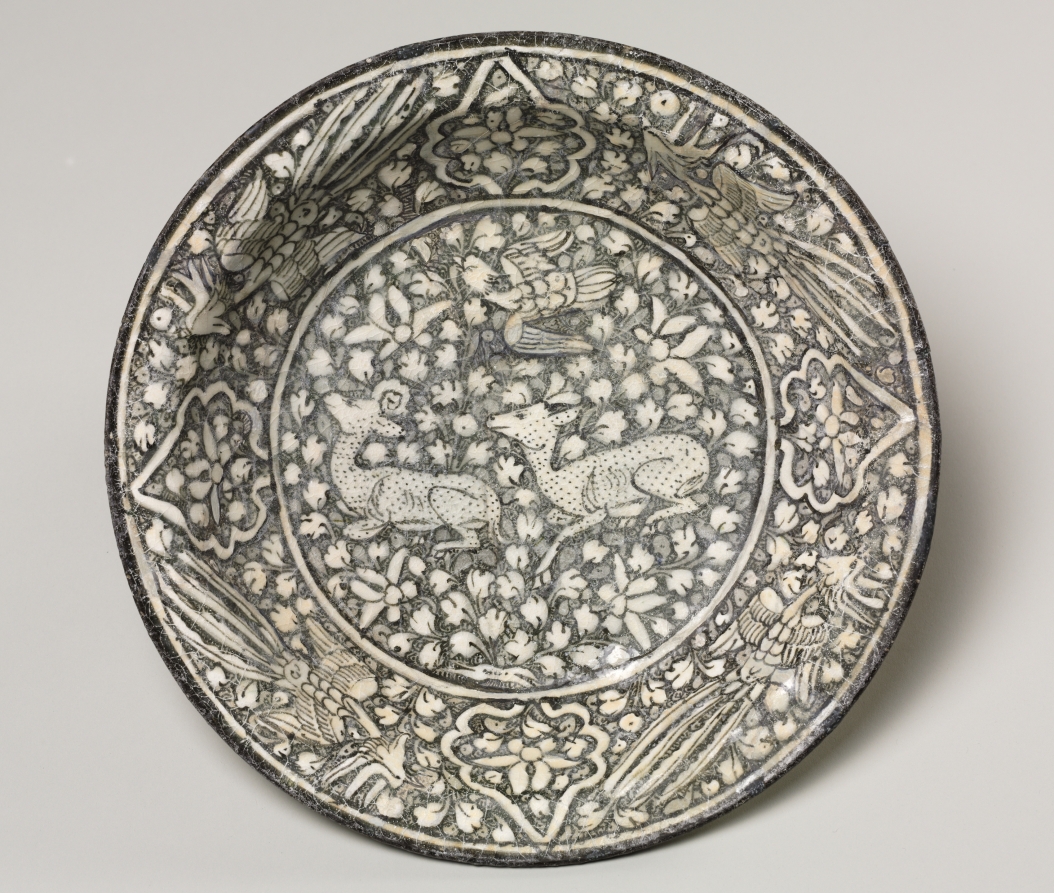
Ceramic dish with deer, phoenix, and lotus blossoms (1300–1350) is in the Cleveland Museum of Art collection.
The work and its context
The museum's open-access catalogue describes the work:
The design of a flying phoenix on the rim was frequently represented on vessels and tilework of this period. The motif was derived from China, most likely transmitted on prestigious silk textiles.
Object facts
- Title: Ceramic dish with deer, phoenix, and lotus blossoms
- Date: 1300–1350
- Culture: Iran, probably Sultanabad, Ilkhanid period (1256–1353)
- Type: Ceramic
- Technique: Fritware with underglaze-painted design, Sultanabad ware
- Dimensions: Overall: 7 x 32.6 cm (2 3/4 x 12 13/16 in.)
- Collection: Islamic Art
- Department: Islamic Art
- Accession number: 1924.742
A detail from the museum
Fritware is made of ground quartz, glass frit (partially fused glass), and a small proportion of fine white clay to approximate the light color and weight of Chinese porcelain.
Collection credit
Purchase from the J. H. Wade Fund
Further reading listed by the museum
- Bowie, Theodore Robert. East-West in Art; Patterns of Cultural & Aesthetic Relationships. Bloomington, IN: Indiana University Press, 1966.
- Mackie, Louise W. Symbols of Power: Luxury Textiles from Islamic Lands, 7th-21st Century. Cleveland; New Haven: Cleveland Museum of Art; Yale University Press, 2015.
View the collection record
See the museum's photographs and full catalogue entry. Catalogue text is reproduced from the Cleveland Museum of Art's open-access data, with HTML formatting removed. This object and its supplied image are designated CC0.
Sources
More in Lifestyle
Keep reading