Ceremonial Axe (gano) (1900s, by 1928): Art, History and Details
Ceremonial Axe (gano) at the Cleveland Museum of Art: 1900s, by 1928, Iron, wood, and metal. Explore the work's context, creator attribution and collection history.
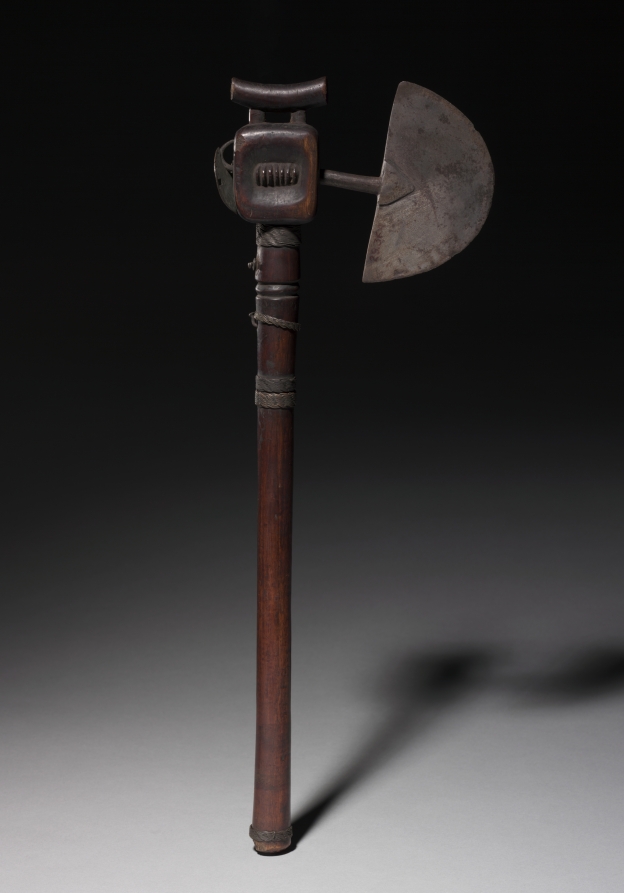
Ceremonial Axe (gano) (1900s, by 1928) is in the Cleveland Museum of Art collection.
The work and its context
The museum's open-access catalogue describes the work:
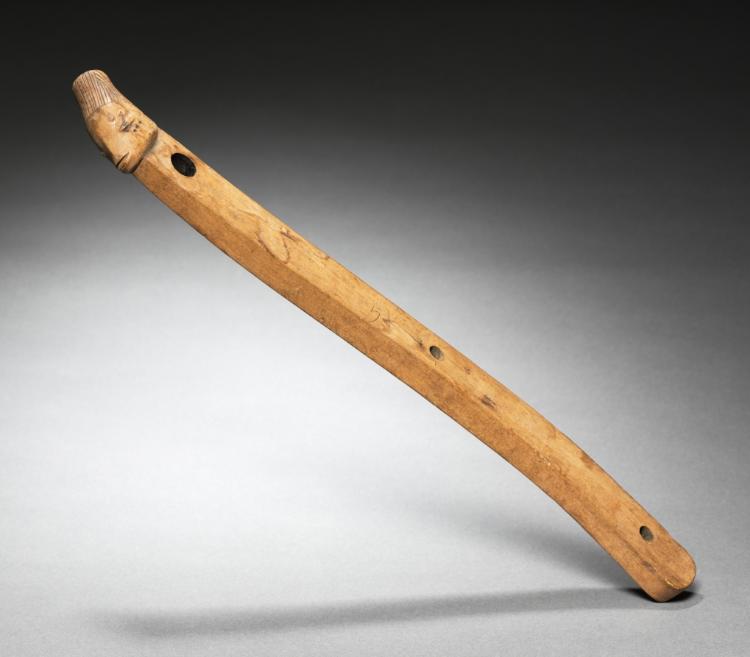
This ceremonial axe (gano) showcases its maker’s skill in using different materials. The crescent-shaped blade was likely locally forged; braided wires and a Swiss pocket watch fragment on the handle were imported. Like the headrest nearby, gano were gendered female; a small headrest is carved at top. Too fine for battle, a man may have held it as a status or ancestral symbol during rituals or dancing. Though made for centuries, religious use of knives and axes waned due to early 20th-century Christianity and government laws. Rising independence-era Zimbabwean nationalism (1960s–70s) revived tradition-based religion and associated objects like the gano.
Object facts
- Title: Ceremonial Axe (gano)
- Date: 1900s, by 1928
- Culture: Southern Africa, Zimbabwe, Shona-style blacksmith-carver
- Type: Arms and Armor
- Technique: Iron, wood, and metal
- Dimensions: Overall: 15.8 cm (6 1/4 in.)
- Collection: African Art
- Department: African Art
- Accession number: 1929.364
A detail from the museum
This ceremonial axe has a half-moon piece of metal nailed to it, marked "EKB Depose." It is part of the mechanism for a pocket watch made by Edward Kummer of Bettlach, whose Swiss factories marked watches with his initials between 1888 and 1932.
Collection credit
Gift of the African Art Sponsors of Karamu House
View the collection record
See the museum's photographs and full catalogue entry. Catalogue text is reproduced from the Cleveland Museum of Art's open-access data, with HTML formatting removed. This object and its supplied image are designated CC0.
Sources
More in Lifestyle
Keep reading