Ceremonial Paddle (1700s-1800s): Art, History and Details
Ceremonial Paddle at the Cleveland Museum of Art: 1700s-1800s, wood. Explore the work's context, creator attribution and collection history.
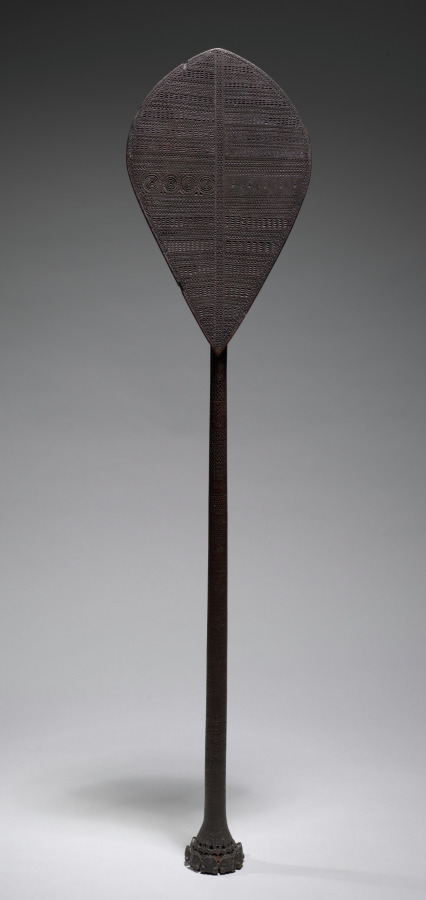
Ceremonial Paddle (1700s-1800s) is in the Cleveland Museum of Art collection.
The work and its context
The museum's open-access catalogue describes the work:
Fine, chip-carved patterns cover the blades and shafts of Austral Islands ceremonial paddles. Squatting human figures carved around the butt are called tiki tiki tangata, meaning man-gods. The shafts of early paddles are usually round in cross-section; 19th-century examples are sometimes square. The function of the intricately carved Austral Islands paddles is uncertain. They may have been displayed on ceremonial occasions, such as dances, pageants, ancestral rituals, or inaugurations.
Object facts
- Title: Ceremonial Paddle
- Date: 1700s-1800s
- Culture: Polynesia, Ra'ivavae, Austral Islands, 18th-19th Century
- Type: Sculpture
- Technique: wood
- Dimensions: Overall: 115 x 24.7 cm (45 1/4 x 9 3/4 in.)
- Collection: Oceanic Art
- Department: Oceania
- Accession number: 1977.29
Collection credit
Bequest of Robert W. Mettner by exchange
View the collection record
See the museum's photographs and full catalogue entry. Catalogue text is reproduced from the Cleveland Museum of Art's open-access data, with HTML formatting removed. This object and its supplied image are designated CC0.
Sources
More in Lifestyle
Keep reading