Chasuble (1700s): Art, History and Details
Chasuble at the Cleveland Museum of Art: 1700s, Silk and metallic threads: embroidery. Explore the work's context, creator attribution and collection history.
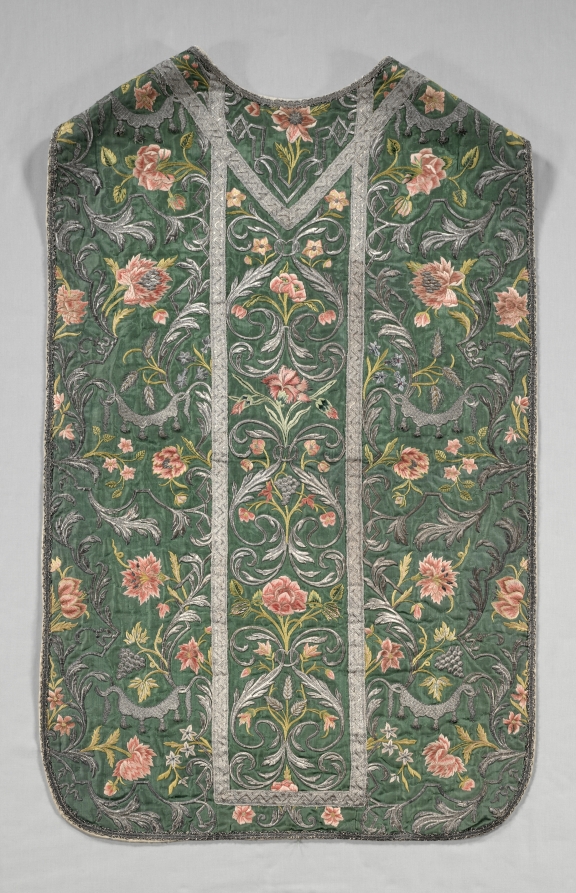
Chasuble (1700s) is in the Cleveland Museum of Art collection.
The work and its context
The museum's open-access catalogue describes the work:
Sheaves of wheat and bunches of grapes, symbols of the bread and wine of the Mass, are embroidered with silver-metal thread amid scrolling leaves on the green silk-damask ground of this chasuble. Liturgical colors—white, red, green, and black, purple, or blue—mandated by Pope Innocent III in the late 1100s were widely ignored by the 1700s, replaced primarily by a lavish use of gold, silver, and pastel silk thread embroidered on white silk fabrics. Long matching stoles were worn under chasubles in styles that identified deacons, priests, and bishops.
Object facts
- Title: Chasuble
- Date: 1700s
- Culture: Italy
- Type: Embroidery
- Technique: Silk and metallic threads: embroidery
- Dimensions: Overall: 104.8 x 66.6 cm (41 1/4 x 26 1/4 in.)
- Collection: T - Ecclesiastical
- Department: Textiles
- Accession number: 1916.1440
Collection credit
Gift of Mr. and Mrs. J. H. Wade
View the collection record
See the museum's photographs and full catalogue entry. Catalogue text is reproduced from the Cleveland Museum of Art's open-access data, with HTML formatting removed. This object and its supplied image are designated CC0.
Sources
More in Lifestyle
Keep reading