Chasuble (1700s): Art, History and Details
Chasuble at the Cleveland Museum of Art: 1700s, Silk and metallic threads: embroidery. Explore the work's context, creator attribution and collection history.
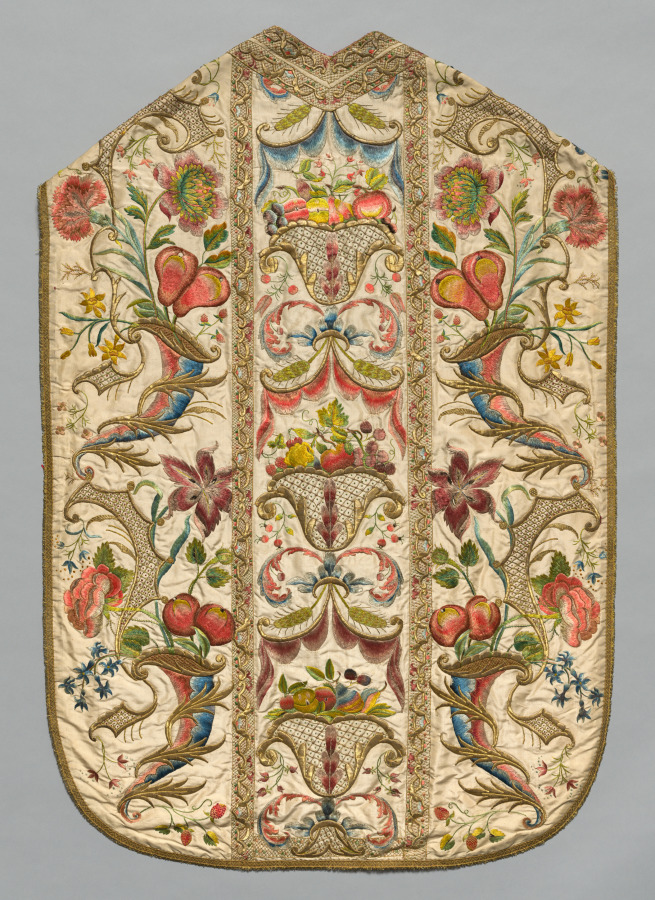
Chasuble (1700s) is in the Cleveland Museum of Art collection.
The work and its context
The museum's open-access catalogue describes the work:
The chasuble’s exquisite symmetrical decoration highlights its central panel where three illusionary gold containers hold skillfully shaded fruit in pastel silk tones. Delicately curving motifs enhance the side panels along with finely stitched strawberries in so-called French knots. This liturgical chasuble and other vestments, worn over a white alb with lace, were embroidered by professional specialists, such as experts who shaded colored silks or secured gold thread, in early versions of assembly lines that were usually in secular workrooms or in convents. The church or commissioner supplied the raw materials and paid a fee for the work.
Object facts
- Title: Chasuble
- Date: 1700s
- Culture: Italy or Spain
- Type: Embroidery
- Technique: Silk and metallic threads: embroidery
- Dimensions: Overall: 113.6 x 75.7 cm (44 3/4 x 29 13/16 in.)
- Collection: T - Ecclesiastical
- Department: Textiles
- Accession number: 1916.1442
Collection credit
Gift of Mr. and Mrs. J. H. Wade
View the collection record
See the museum's photographs and full catalogue entry. Catalogue text is reproduced from the Cleveland Museum of Art's open-access data, with HTML formatting removed. This object and its supplied image are designated CC0.
Sources
More in Lifestyle
Keep reading
Related stories