Chasuble (c. 1720s): Art, History and Details
Chasuble at the Cleveland Museum of Art: c. 1720s, Silk; tabby weave. Explore the work's context, creator attribution and collection history.
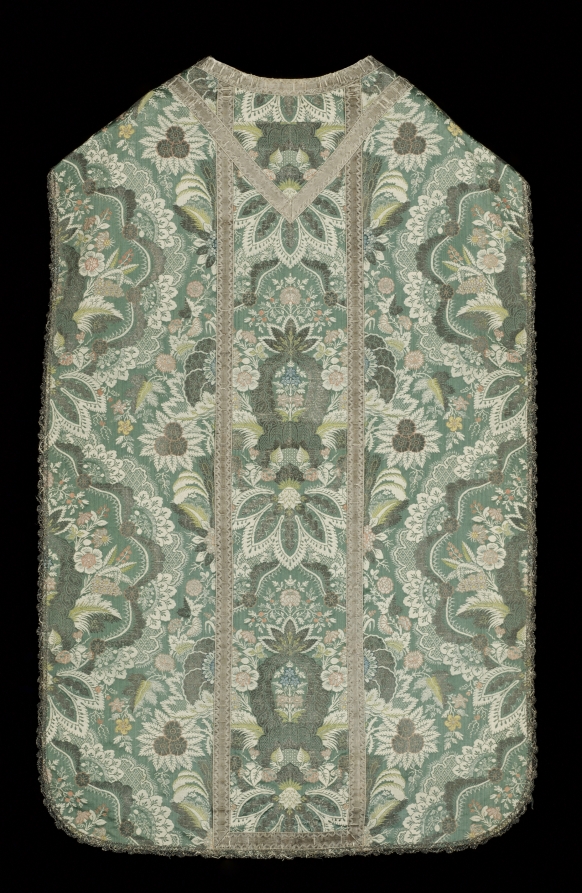
Chasuble (c. 1720s) is in the Cleveland Museum of Art collection.
The work and its context
The museum's open-access catalogue describes the work:
The elegant formal design of blossoms and leaves in this woven silk is especially suitable for chasubles, liturgical vestments worn over albs with lace flounces and cuffs. Its small detailed ornament is reminiscent of prestigious lace, and is known as “lace pattern.” The division of the surface into three panels reflects the outmoded fashion of highlighting a different fabric in the center, often with religious images, called orphrey bands. In another change of ecclesiastical fashion, woven silks, such as this splendid example in the style of King Louis XIV (ruled 1638–1715) of France, were replaced during the early 1700s by embroidered decoration, which dominates in this exhibition.
Object facts
- Title: Chasuble
- Date: c. 1720s
- Culture: France, Louis 14th style, 18th century
- Type: Textile
- Technique: Silk; tabby weave
- Dimensions: Overall: 115.6 x 73.1 cm (45 1/2 x 28 3/4 in.)
- Collection: T - Ecclesiastical
- Department: Textiles
- Accession number: 1916.1438
Collection credit
Gift of Mr. and Mrs. J. H. Wade
View the collection record
See the museum's photographs and full catalogue entry. Catalogue text is reproduced from the Cleveland Museum of Art's open-access data, with HTML formatting removed. This object and its supplied image are designated CC0.
Sources
More in Lifestyle
Keep reading