Chasuble (c. 1760–70): Art, History and Details
Chasuble at the Cleveland Museum of Art: c. 1760–70, taffeta, brocaded; silk, silver, and gold thread. Explore the work's context, creator attribution and collection history.
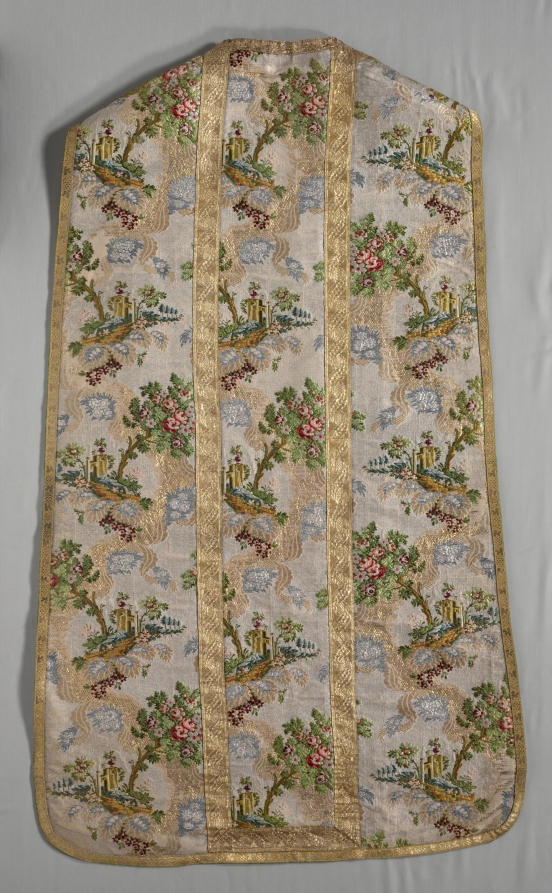
Chasuble (c. 1760–70) is in the Cleveland Museum of Art collection.
The work and its context
The museum's open-access catalogue describes the work:
This costly woven silk with brilliant strips of gold foil features landscapes with blossoming trees and architecture, motifs that were popular by the 1760s. Its asymmetrical pattern suggests it was designed as a furnishing fabric rather than for clothing. Perhaps it was donated by a faithful parishioner to be made into an ecclesiastical vestment in a well-established practice.
Object facts
- Title: Chasuble
- Date: c. 1760–70
- Culture: France, Lyon
- Type: Textile
- Technique: taffeta, brocaded; silk, silver, and gold thread
- Dimensions: Overall: 121.8 x 73 cm (47 15/16 x 28 3/4 in.)
- Collection: T - Ecclesiastical
- Department: Textiles
- Accession number: 1986.29
Collection credit
John L. Severance Fund
View the collection record
See the museum's photographs and full catalogue entry. Catalogue text is reproduced from the Cleveland Museum of Art's open-access data, with HTML formatting removed. This object and its supplied image are designated CC0.
Sources
More in Lifestyle
Keep reading