Chopstick (918–1392): Art, History and Details
Chopstick at the Cleveland Museum of Art: 918–1392, bronze. Explore the work's context, creator attribution and collection history.
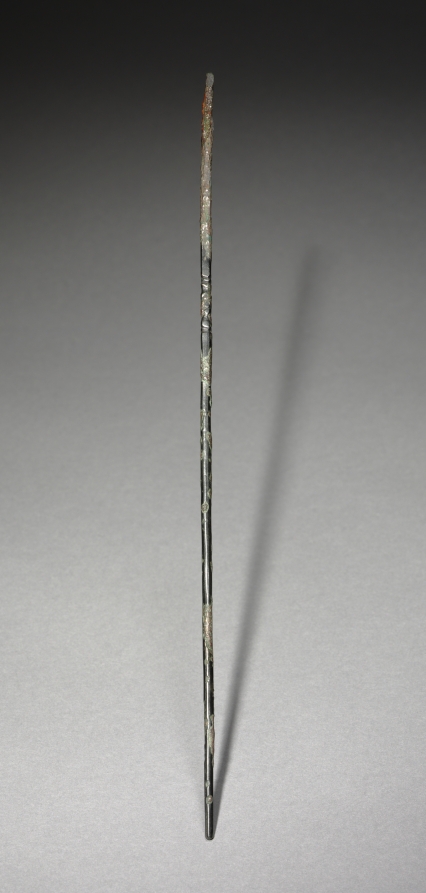
Chopstick (918–1392) is in the Cleveland Museum of Art collection.
The work and its context
The museum's open-access catalogue describes the work:
In Korea, chopsticks made of metal such as brass, silver, and gold were excavated from ancient tombs and ruins dated to the 6th century at the earliest. Burial goods often include utilitarian objects such as table wares and utensils because the dead were believed to need them in the afterlife.
Object facts
- Title: Chopstick
- Date: 918–1392
- Culture: Korea, Goryeo dynasty (918–1392)
- Type: Metalwork
- Technique: bronze
- Dimensions: Overall: 24.8 cm (9 3/4 in.)
- Collection: Korean Art
- Department: Korean Art
- Accession number: 1917.1032.1
A detail from the museum
In contrast to the Chinese and Japanese, Koreans still prefer metal chopsticks (stainless steel and brass) to wooden ones.
Collection credit
Gift of the John Huntington Art and Polytechnic Trust
Further reading listed by the museum
- Goryeo Dynasty: Korea's Age of Enlightenment, 918-1392. San Francisco: Asian Art Museum, 2003.
- Horlyck, Charlotte. "The Eternal Link: Grave Goods of the Koryŏ Kingdom (918-1392 CE)." Ars Orientalis 44 (2014): 156-79.
- Bronze in Life and Art [삶과 예술 속. 청동 靑銅 이야기] National Cheongju Museum (2016).
View the collection record
See the museum's photographs and full catalogue entry. Catalogue text is reproduced from the Cleveland Museum of Art's open-access data, with HTML formatting removed. This object and its supplied image are designated CC0.
Sources
More in Lifestyle
Keep reading
![Tetradrachm: Head of Alexander III [The Great] (obverse); Athena (reverse) (306 BCE; Cleveland 1916.994)](https://openaccess-cdn.clevelandart.org/1916.994/1916.994_web.jpg)