Christ the Redeemer (Salvator Mundi) (c. 1490–1500): Art, History and Details
Christ the Redeemer (Salvator Mundi) at the Cleveland Museum of Art: c. 1490–1500, engraving. Explore the work's context, creator attribution and collection history.
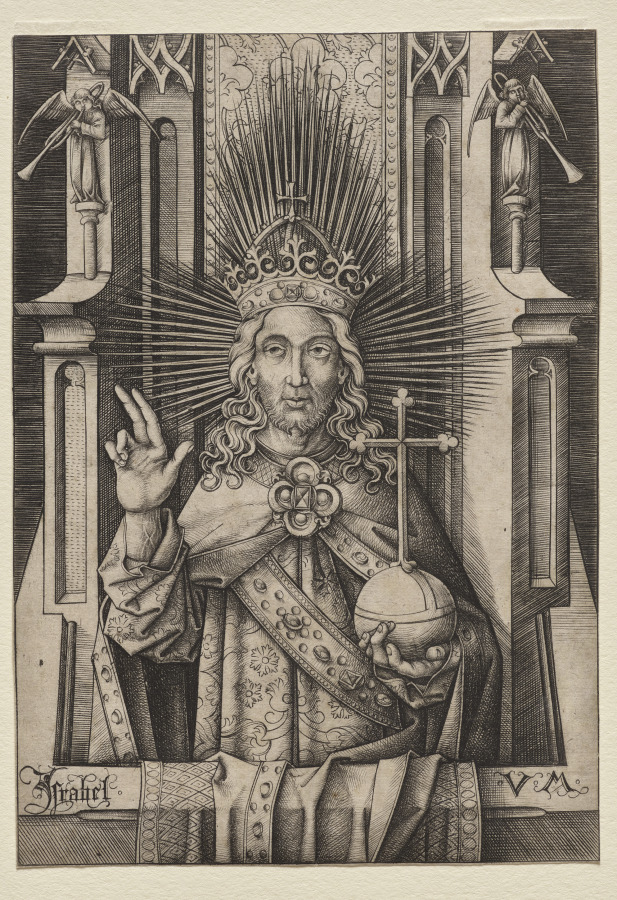
Christ the Redeemer (Salvator Mundi) (c. 1490–1500) is in the Cleveland Museum of Art collection. The museum's creator attribution is Israhel van Meckenem (German, c. 1440–1503).
The work and its context
The museum's open-access catalogue describes the work:
Trained as a goldsmith, Meckenem displayed the decorative potential of his art by engraving a glimmering burst of sword-like rays around Christ’s head and a variety of patterns on Christ’s robe, his jeweled sash, and the tapestries draping the gothic pulpit. The presentation of Christ within ecclesiastic architecture symbolically connects Christ’s authority as Salvator Mundi—Savior of the World—with the Church.
Object facts
- Title: Christ the Redeemer (Salvator Mundi)
- Date: c. 1490–1500
- Creator attribution: Israhel van Meckenem (German, c. 1440–1503)
- Culture: Germany
- Type: Print
- Technique: engraving
- Dimensions: Image: 20.3 x 14.3 cm (8 x 5 5/8 in.); Sheet: 20.3 x 14.3 cm (8 x 5 5/8 in.)
- Collection: PR - Engraving
- Department: Prints
- Accession number: 1949.563
Collection credit
John L. Severance Fund
Further reading listed by the museum
- "New in the Galleries.” Cleveland Art: Cleveland Museum of Art Members Magazine 57, no. 3 (May/June 2017): Back cover.
View the collection record
See the museum's photographs and full catalogue entry. Catalogue text is reproduced from the Cleveland Museum of Art's open-access data, with HTML formatting removed. This object and its supplied image are designated CC0.
Sources
More in Lifestyle
Keep reading