Coin of Eukratides I (170–145 BCE): Art, History and Details
Coin of Eukratides I at the Cleveland Museum of Art: 170–145 BCE, silver. Explore the work's context, creator attribution and collection history.
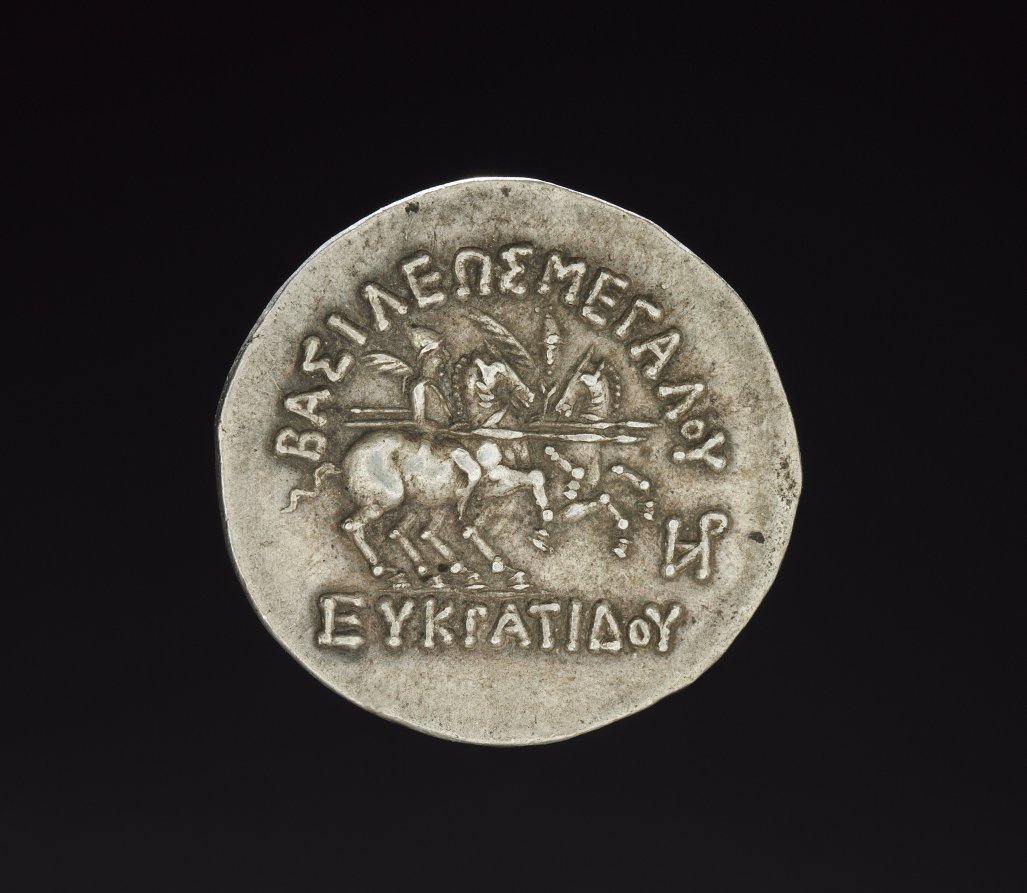
Coin of Eukratides I (170–145 BCE) is in the Cleveland Museum of Art collection.
The work and its context
The museum's open-access catalogue describes the work:
The twins Castor and Pollux were known as the Diosuroi in Greek mythology, and they were the children of Zeus and Leda. Together they also form the constellation Gemini. They frequently appeared on the reverse sides of Greek coinage, riding horses and holding spears, as they do on this Indo-Greek coin from the Hellenistic kingdom of Bactria.
Object facts
- Title: Coin of Eukratides I
- Date: 170–145 BCE
- Culture: Afghanistan, Bactria
- Type: Silver
- Technique: silver
- Dimensions: Diameter: 3.3 x 0.5 cm (1 5/16 x 3/16 in.)
- Collection: Southeast Asian
- Department: Indian and Southeast Asian Art
- Accession number: 2011.211.b
Collection credit
Gift of Dr. Norman Zaworski
View the collection record
See the museum's photographs and full catalogue entry. Catalogue text is reproduced from the Cleveland Museum of Art's open-access data, with HTML formatting removed. This object and its supplied image are designated CC0.
Sources
More in Lifestyle
Keep reading