Columbarium Tomb Plaque with the Monogram of Christ (400–800): Art, History and Details
Columbarium Tomb Plaque with the Monogram of Christ at the Cleveland Museum of Art: 400–800, terracotta. Explore the work's context, creator attribution and collection history.
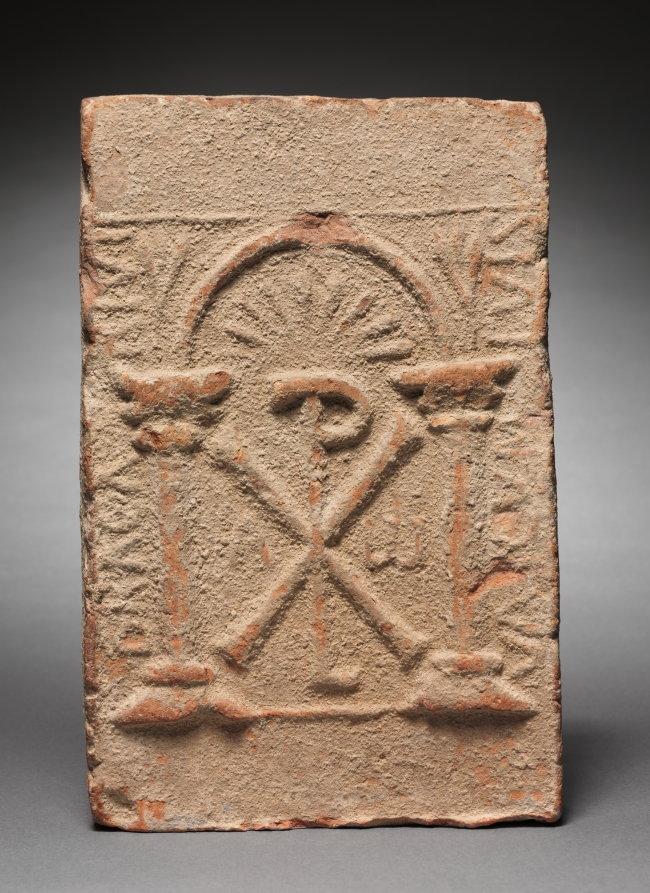
Columbarium Tomb Plaque with the Monogram of Christ (400–800) is in the Cleveland Museum of Art collection.
The work and its context
The museum's open-access catalogue describes the work:
This thick clay plaque covered a burial niche that contained the remains of the deceased in a simple communal tomb complex called a columbarium. The chi-rho monogram of Christ identifies the deceased as a Christian. The monogram was seen as representing Christ’s victory over death, while the letters that flank it, alpha and omega, the first and last letters of the Greek alphabet, symbolize Christ as the beginning and end of all things.
Object facts
- Title: Columbarium Tomb Plaque with the Monogram of Christ
- Date: 400–800
- Culture: Spain (Visigothic or Byzantine)
- Type: Sculpture
- Technique: terracotta
- Dimensions: Overall: 32.4 x 20.8 cm (12 3/4 x 8 3/16 in.)
- Collection: MED - Migration Period
- Department: Medieval Art
- Accession number: 1938.160
Collection credit
Gift of John D. Rockefeller Jr.
Further reading listed by the museum
- The Brummer Gallery Records. Cloisters (Museum), n.d.
- Gertsman, Elina and Barbara H. Rosenwein. The Middle Ages in 50 Objects. Cambridge: Cambridge University Press, 2018.
- Sánchez Galera, José María, and Gregorio Luri Medrano. La edad de las nueces: los niños en el Imperio Romano. Madrid : Ediciones Encuentro S.A., 2021.
View the collection record
See the museum's photographs and full catalogue entry. Catalogue text is reproduced from the Cleveland Museum of Art's open-access data, with HTML formatting removed. This object and its supplied image are designated CC0.
Sources
More in Lifestyle
Keep reading