Commemorative figure (lefem) (mid-1800s–1910): Art, History and Details
Commemorative figure (lefem) at the Cleveland Museum of Art: mid-1800s–1910, wood. Explore the work's context, creator attribution and collection history.
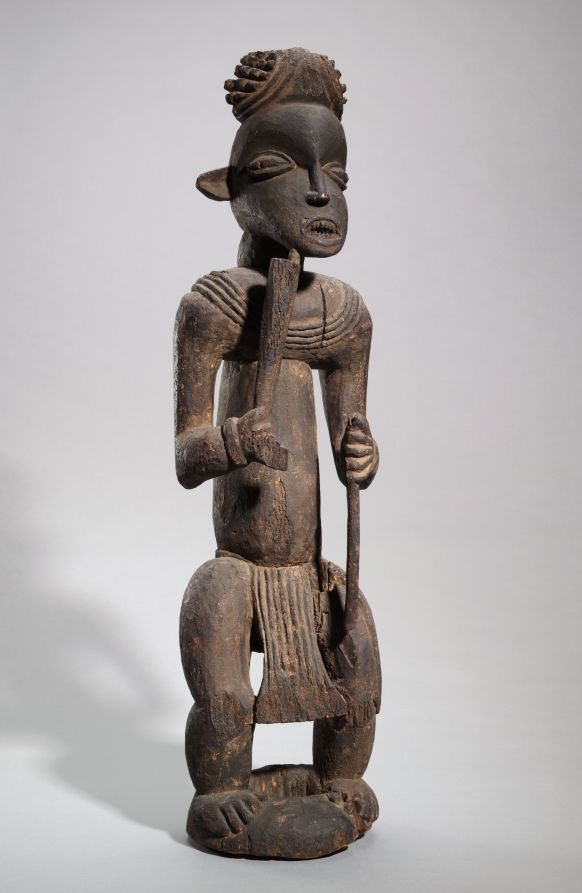
Commemorative figure (lefem) (mid-1800s–1910) is in the Cleveland Museum of Art collection. The museum's creator attribution is Ateu Atsa (Bangwa, c. 1840–1910).
The work and its context
The museum's open-access catalogue describes the work:
Carved during their subject's lifetime, such idealized portraits function as their living stand-ins or intermediaries. Adorned with royal attire consisting of a bristled cloth cap, beaded necklace, pleated loincloth, drinking horn, and now-broken pipe, this figure was carved as a commemorative portrait of a historical king or high dignitary. It was kept by a secret association called Lefem, whose members gathered weekly in a sacred space in the forest to discuss matters related to the kingdom's welfare. Placed in a royal shrine, the figure witnessed sacrifices made to the skulls of the chief’s ancestors. Meant to safeguard the kingdom and protect the fecundity of its inhabitants, it was also exhibited during funerals and royal ceremonies.
Object facts
- Title: Commemorative figure (lefem)
- Date: mid-1800s–1910
- Creator attribution: Ateu Atsa (Bangwa, c. 1840–1910)
- Culture: Africa, Central Africa, Cameroon, Bangwa Kingdom
- Type: Sculpture
- Technique: wood
- Dimensions: Overall: 92.1 x 20.3 cm (36 1/4 x 8 in.)
- Collection: African Art
- Department: African Art
- Accession number: 1987.62
A detail from the museum
Ateu Atsa was both a famous and infamous artist! It is said that he enraged a ruler by portraying him realistically rather than in an idealized way, and was chased out of town after the sculpture was revealed.
Collection credit
Purchase from the J. H. Wade Fund
Further reading listed by the museum
- Petridis, Constantijn. South of the Sahara: selected works of African art. Cleveland: Cleveland Museum of Art, 2003.
- Lintig, Bettina von. 2014. “A Grasslands Beaded Leopard Skin.” Tribal Art: Quarterly Journal of the Art Culture and History of Traditional Peoples and New World Civilizations 18 (3) No. 72 Summer 2014 Pp 108-117.
- New Orleans Museum of Art, Museum of Fine Arts, Houston, Field Museum of Natural History, American Museum of Natural History, Smithsonian Institution Traveling Exhibition Service, and National Museum of Natural History (U.S.). 1984. The Art of Cameroon. Washington, D.C: Smithsonian Institution Traveling Exhibition Service, cat. no. 7, pp. 86-87.
View the collection record
See the museum's photographs and full catalogue entry. Catalogue text is reproduced from the Cleveland Museum of Art's open-access data, with HTML formatting removed. This object and its supplied image are designated CC0.
Sources
More in Lifestyle
Keep reading