Communion Cup (1671–72): Art, History and Details
Communion Cup at the Cleveland Museum of Art: 1671–72, silver gilt. Explore the work's context, creator attribution and collection history.
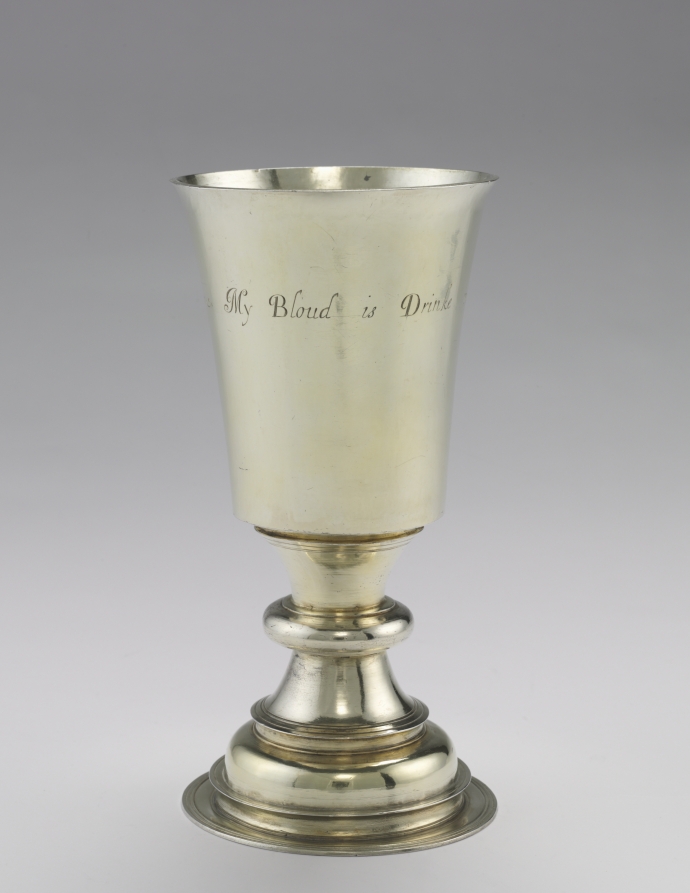
Communion Cup (1671–72) is in the Cleveland Museum of Art collection.
The work and its context
The museum's open-access catalogue describes the work:
This cup was produced shortly after the death of Oliver Cromwell (1599–1658), a leader of the English Civil War and Lord Protector of the British Isles from 1653 to 1658. An intensely religious man, Cromwell believed that the Reformation (1517–1648) failed to sufficiently eliminate Catholic beliefs and practices in Great Britain. The simplified shape and design of this vessel reflects his desire to visually differentiate Protestant communion cups from the chalices used by the Roman Catholic Church.
Object facts
- Title: Communion Cup
- Date: 1671–72
- Culture: England, London
- Type: Silver
- Technique: silver gilt
- Dimensions: Overall: 25.3 x 12.9 cm (9 15/16 x 5 1/16 in.)
- Collection: Decorative Arts
- Department: Decorative Art and Design
- Accession number: 1980.79
A detail from the museum
The words engraved along the exterior of this cup, "My Bloud is Drinke indeed,” refer to Christ’s instructions during the Last Supper, as described in the New Testament of the Christian Bible.
Collection credit
Purchase from the J. H. Wade Fund
View the collection record
See the museum's photographs and full catalogue entry. Catalogue text is reproduced from the Cleveland Museum of Art's open-access data, with HTML formatting removed. This object and its supplied image are designated CC0.
Sources
More in Lifestyle
Keep reading