Copy after Giulio Romano's Fall of Icarus (after 1536): Art, History and Details
Copy after Giulio Romano's Fall of Icarus at the Cleveland Museum of Art: after 1536, pen and brown ink and brush and brown wash over red chalk, heightened with lead white. Explore the work's context, creator attribution and collection hist
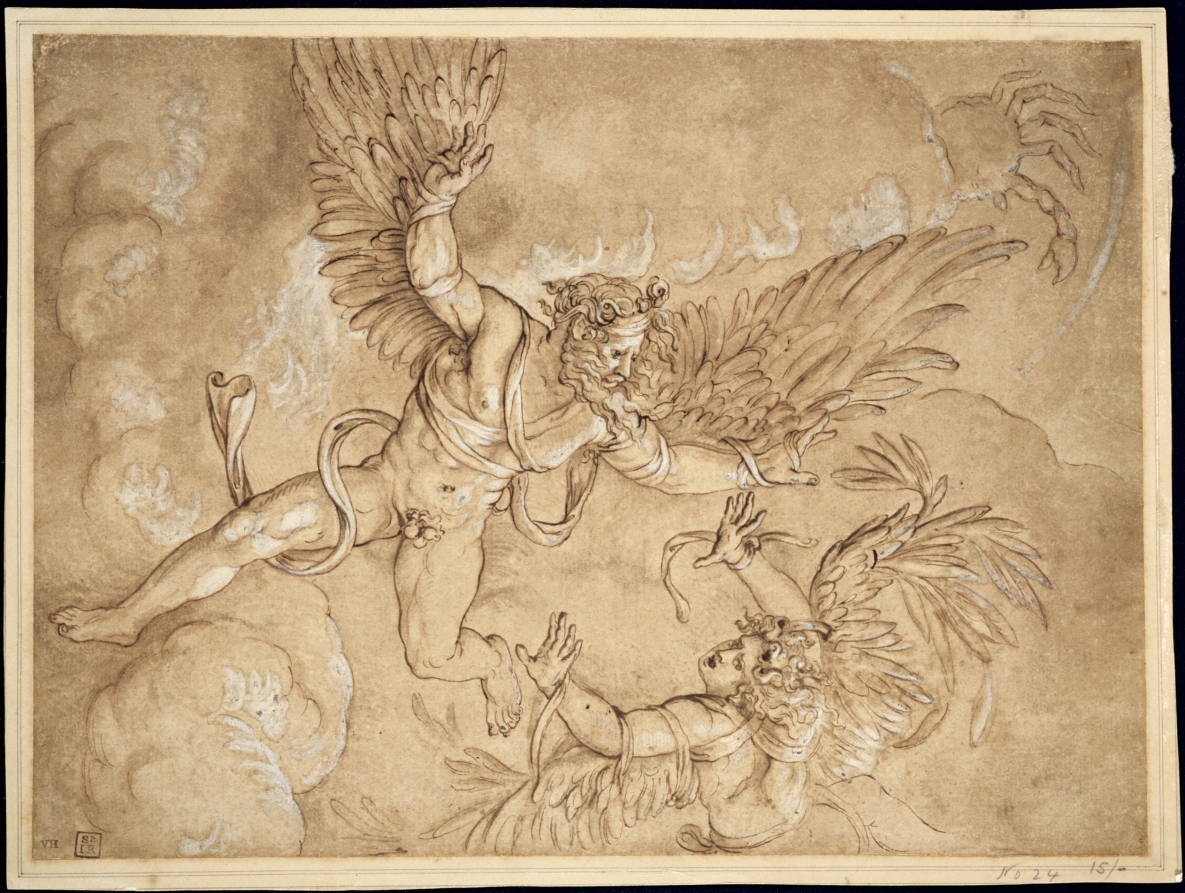
Copy after Giulio Romano's Fall of Icarus (after 1536) is in the Cleveland Museum of Art collection. The museum's creator attribution is Giulio Romano (Italian, 1492/99–1546).
The work and its context
The museum's open-access catalogue describes the work:
Having flown too close to the sun, Icarus plummets from the sky as the wax securing his makeshift wings melts, and the straps unravel. His father Daedelus, who invented the wings, watches in horror as his son begins a deadly fall. Punished for failing to heed his father’s warning and attempting to enter the realm of the gods, Icarus was a moral reminder to Renaissance viewers of human fallibility and the risks of excessive pride.
Object facts
- Title: Copy after Giulio Romano's Fall of Icarus
- Date: after 1536
- Creator attribution: Giulio Romano (Italian, 1492/99–1546)
- Culture: Italy
- Type: Drawing
- Technique: pen and brown ink and brush and brown wash over red chalk, heightened with lead white
- Dimensions: Sheet: 39.8 x 29.3 cm (15 11/16 x 11 9/16 in.); Secondary Support: 41.9 x 31.6 cm (16 1/2 x 12 7/16 in.)
- Collection: DR - Italian
- Department: Drawings
- Accession number: 1992.90
Collection credit
Seventy-fifth anniversary gift of Robert A. Frary in memory of I. T. Frary
Further reading listed by the museum
- Turner, Evan H. "The Year in Review for 1992." The Bulletin of the Cleveland Museum of Art 80, no. 2 (February 1993): 38-79.
View the collection record
See the museum's photographs and full catalogue entry. Catalogue text is reproduced from the Cleveland Museum of Art's open-access data, with HTML formatting removed. This object and its supplied image are designated CC0.
Sources
More in Lifestyle
Keep reading